

By Sarah Hodges
We are amidst times of change, in a positive and exciting way. Understanding how people are doing across an entire state is both a scientific and human challenge.
Last month, as I spoke with Still & Moving Center’s Dr. Eva McKinsey, my curiosity grew. As a social science PhD and researcher, Eva’s involved in what promises to be a significant project for Hawai‘i: a statewide survey aimed at measuring overall quality of life across the islands.
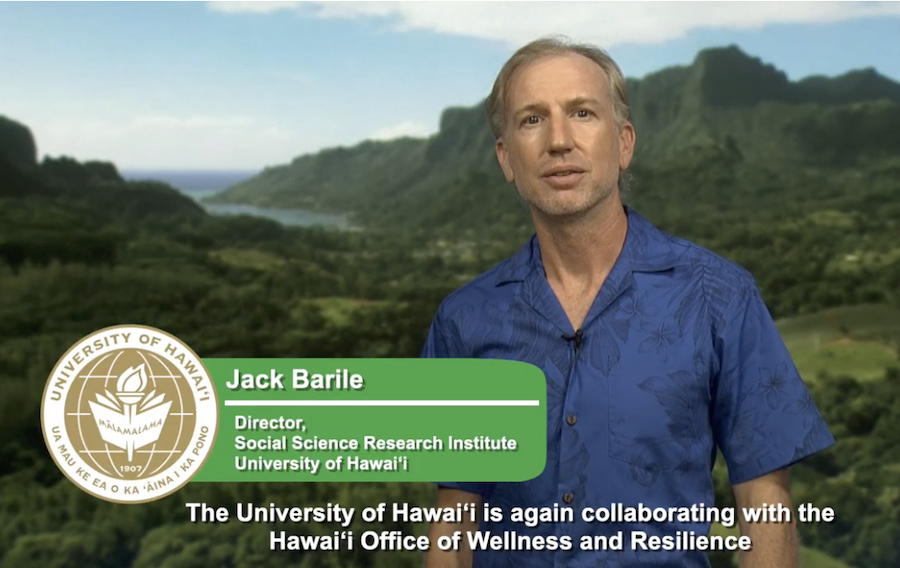
A similar effort in 2024 gathered over 8,000 responses. The results offered a stronger foundation for understanding and addressing the health challenges facing communities across the islands. This year, Eva, with the Social Science Research Institute at the University of Hawai‘i, hope to reach a much larger and more diverse group of residents, strengthening both the accuracy and impact of their findings.
The survey results will become publicly available so that anyone working on change efforts such as community organizations, researchers, legislators, and state agencies, can have timely and representative data to make informed changes.
The survey will also support decision making on a state level. With the results of this survey, state leaders plan to make gradual adjustments in how its institutions, such as healthcare, education, and law enforcement, plan and direct their efforts.
In February 2024, Governor Josh Green declared Hawai‘i a trauma-informed state, building on legislation that began in 2021. On a simplified level, a trauma-informed state shifts from asking what is wrong with a person or group to asking what happened to a person or group. It opens the way for a more compassionate and effective approach in helping people.
Your participation will help their aims towards a healthier Hawai‘i. The more people who participate, the more representative and actionable the data will be. Share your experience living on the islands by filling out the survey anonymously here before the end of May.
How did this survey come about, and how will it really help?
As a trauma-informed state, Hawai‘i strives for its systems – such as healthcare, education, social services, and law enforcement – to act with an understanding that many people have experienced trauma. This is the beginning of a potentially long process to fully implement this initiative and bring these state institutions “up to speed.”
In response to the 2024 declaration, the Office of Wellness and Resilience (OWR), a designated state office with a mission to help make Hawaiʻi a more trauma-informed place, expanded its role in coordinating statewide efforts. One task within the bill: to create an electronic dashboard focused on social determinants of health in Hawai‘i. OWR began collaborating with UH to help with data collection.
A number of states including Delaware, Virginia, Pennsylvania, Tennessee, California, and Wyoming, have adopted statewide trauma-informed initiatives or formally declared themselves trauma-informed in some capacity. These efforts often focus on training public employees, strengthening coordination across agencies, expanding mental health support, and integrating trauma awareness into schools, healthcare, and social services. Slowly, they are reshaping how public systems see and respond to people’s lives.
This survey only becomes meaningful if it reflects lived experiences accurately and compassionately. The work is not just being done by institutions or researchers, but by the people whose realities are being measured. In that sense, every resident contributing data, sharing experience, or simply showing up in the dataset is helping shape how Hawai‘i understands and shapes itself.
As residents, we often want to see improvements in how our state is run. This opportunity give people a chance to be a part of this change. Though
“I really enjoy working on this project for many reasons,” says Eva. “It takes such a holistic, comprehensive perspective on wellness and quality of life. The core belief in this project is that the conditions that we live in impact our wellbeing and our futures.” Before this project, Eva worked in the juvenile court system, integrating trauma-informed approaches into courts and amongst judges.
Eva encourages Still & Moving community members to take the survey and share it with friends and family. Each response adds a clearer picture of life in Hawai‘i and helps shape how future decisions support the well-being of its communities.
Reminder: Fill out the survey before May 31st!
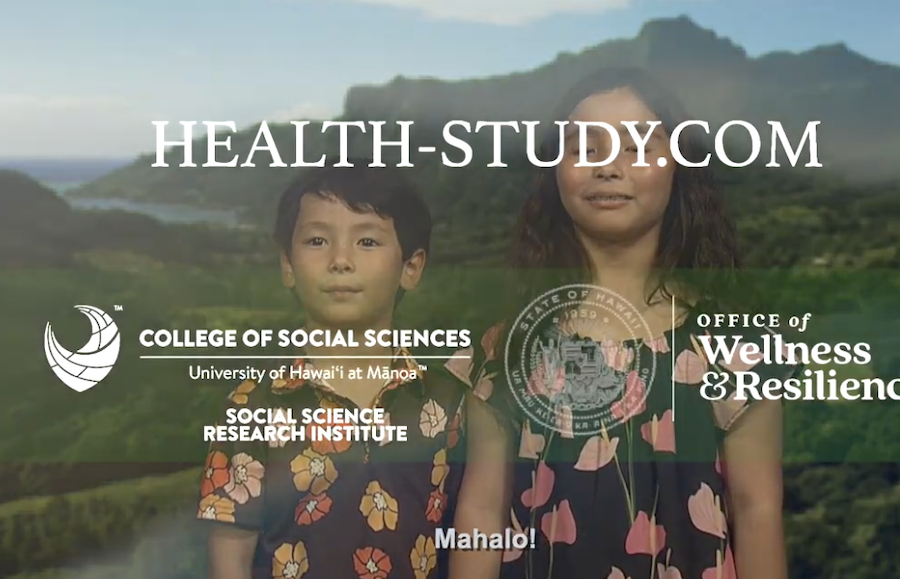
If you haven’t taken our Hawaiʻi Quality of Life Survey, please do at health-study.com. Your voice matters.

This post is also available in: