

September 2026
By having a reverence for life, we enter into a spiritual relation with the world. By practicing reverence for life, we become good, deep, and alive.
– Albert Schweitzer
This year has brought me new meaning to the notion of EVERYTHING being alive.
My story centers on our family’s company, Prometheus Construction and what we have been privileged to learn by dealing with rocks, pohaku, to ensure public safety. The cultural practitioners of Hawai’i, including our Still & Moving kumu hula Mālia Helelā, have humbled and enlightened us through what they have shared about revering all of life.
Let me start by pointing to a great man from Austria named Albert Schweitzer whose creed was “reverence for life”. Don’t you love that phrase? Schweitzer gave up his profitable medical career and life as a concert pianist. He made his way to the jungles of Africa to doctor the poor and sick who had no one else to take care of them. He cared deeply for animals, too, and followed a vegetarian diet.
Stories like this make their way into the folds of my heart, seeping their compassion into my very blood.
Since perhaps as a child when I stayed with our cat as she gave birth to a litter of wet, wiggling, closed-eyed little lumps of life, I’ve cared about animals. My friend and I used to feed bits of our lunch to the ants on the school playground so they wouldn’t go hungry. I cried whenever my dad pruned back my friends, the mulberry trees that I climbed in. With every chomp of his big lopper shears, I felt as if they were losing their limbs. Well, literally that was true! However, my dad knew they would grow back green and healthy, whereas I felt as if they were getting mass amputations. I felt their lifehood very strongly.
All life is sacred, including that which from the human point of view may seem lower in the scale.
– Albert Schweitzer
However, I don’t think I ever had strong feelings for what I would have considered “inanimate objects”. Albert Schweitzer’s “reverence for life” did not extend that far for me. I’ve been working on my receptivity to Nature since arriving in Hawai’i, as you can read here: Life at the Center: Open to Receive. Vol. 111, September 2022
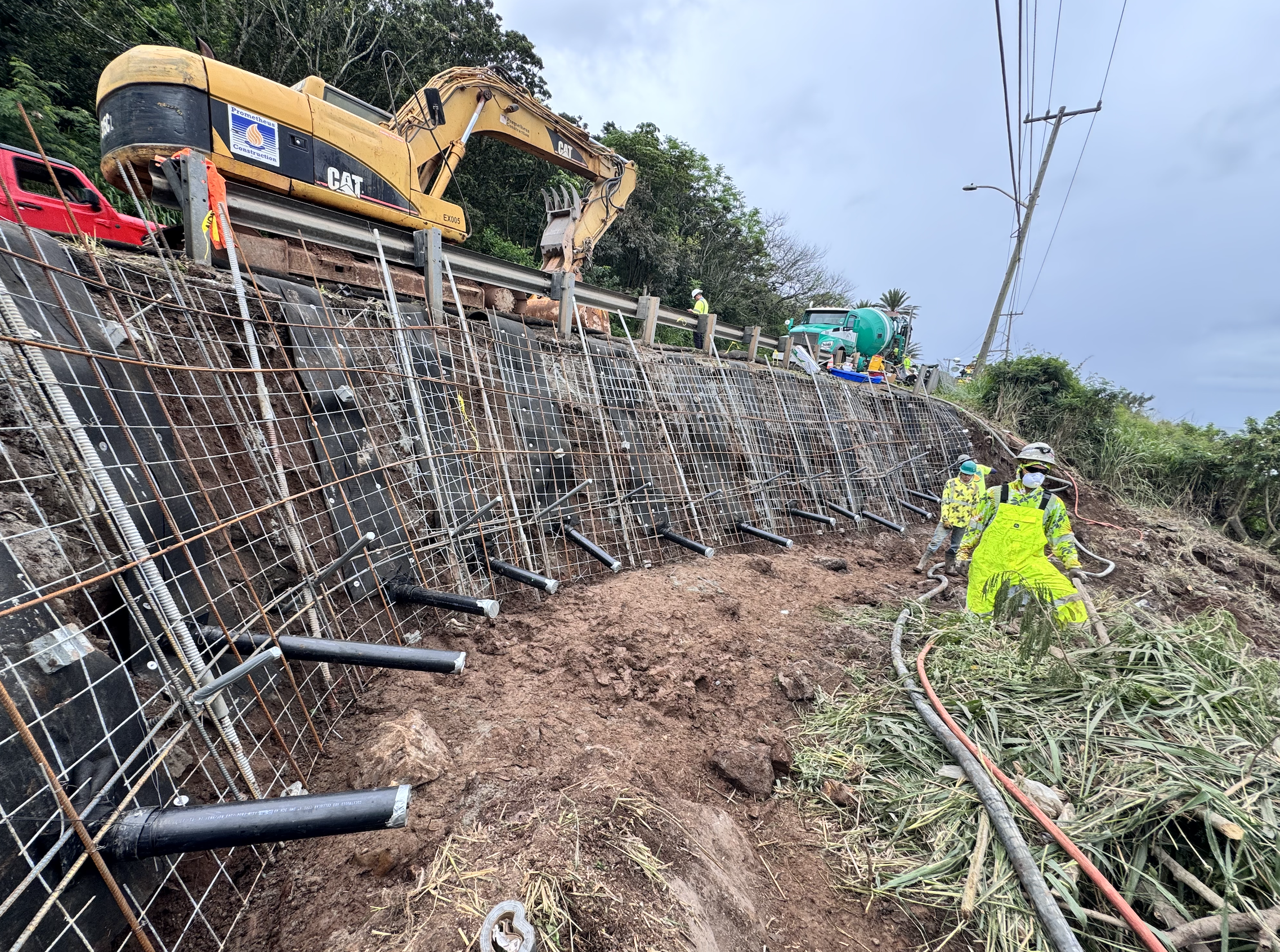
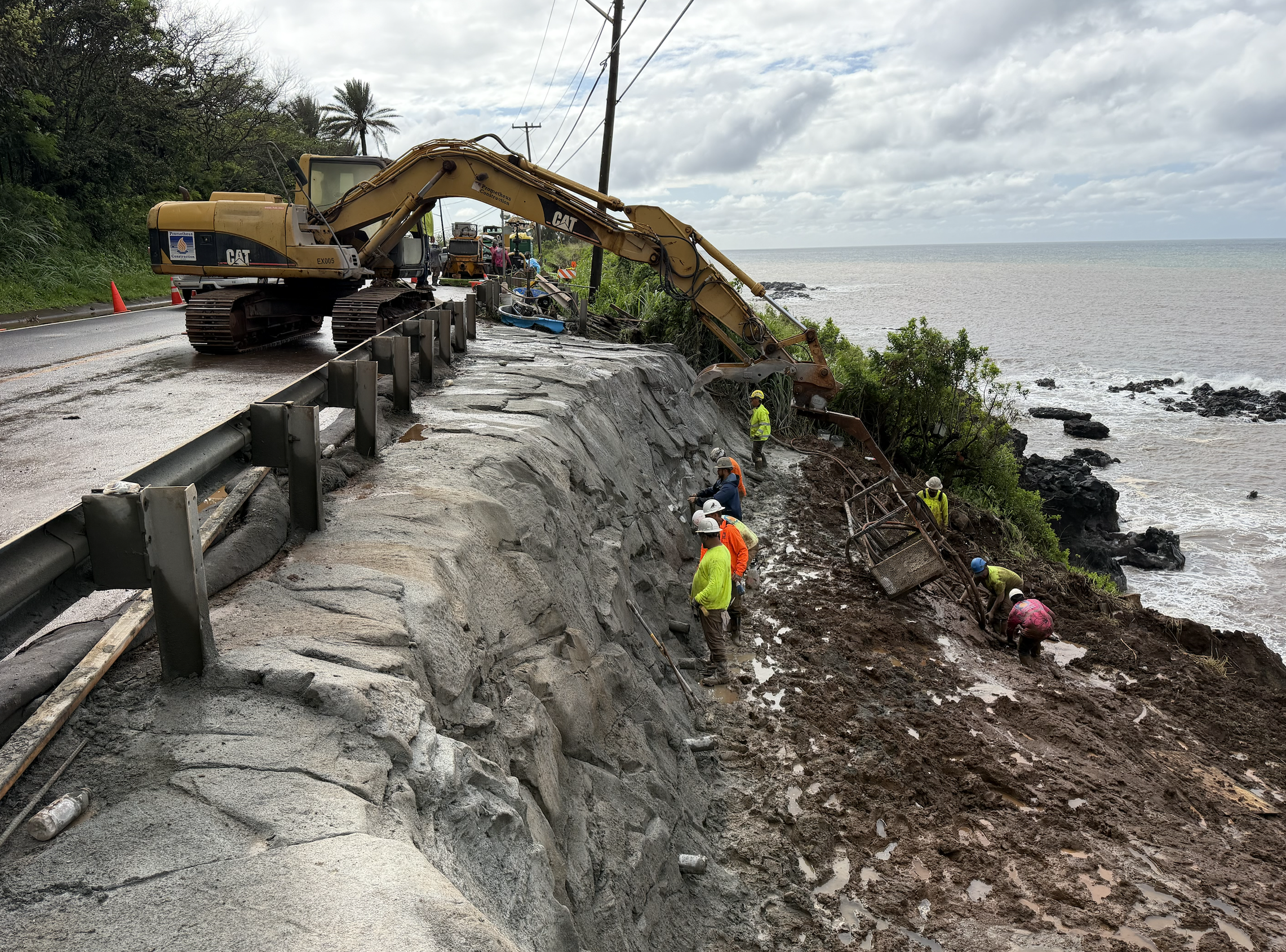
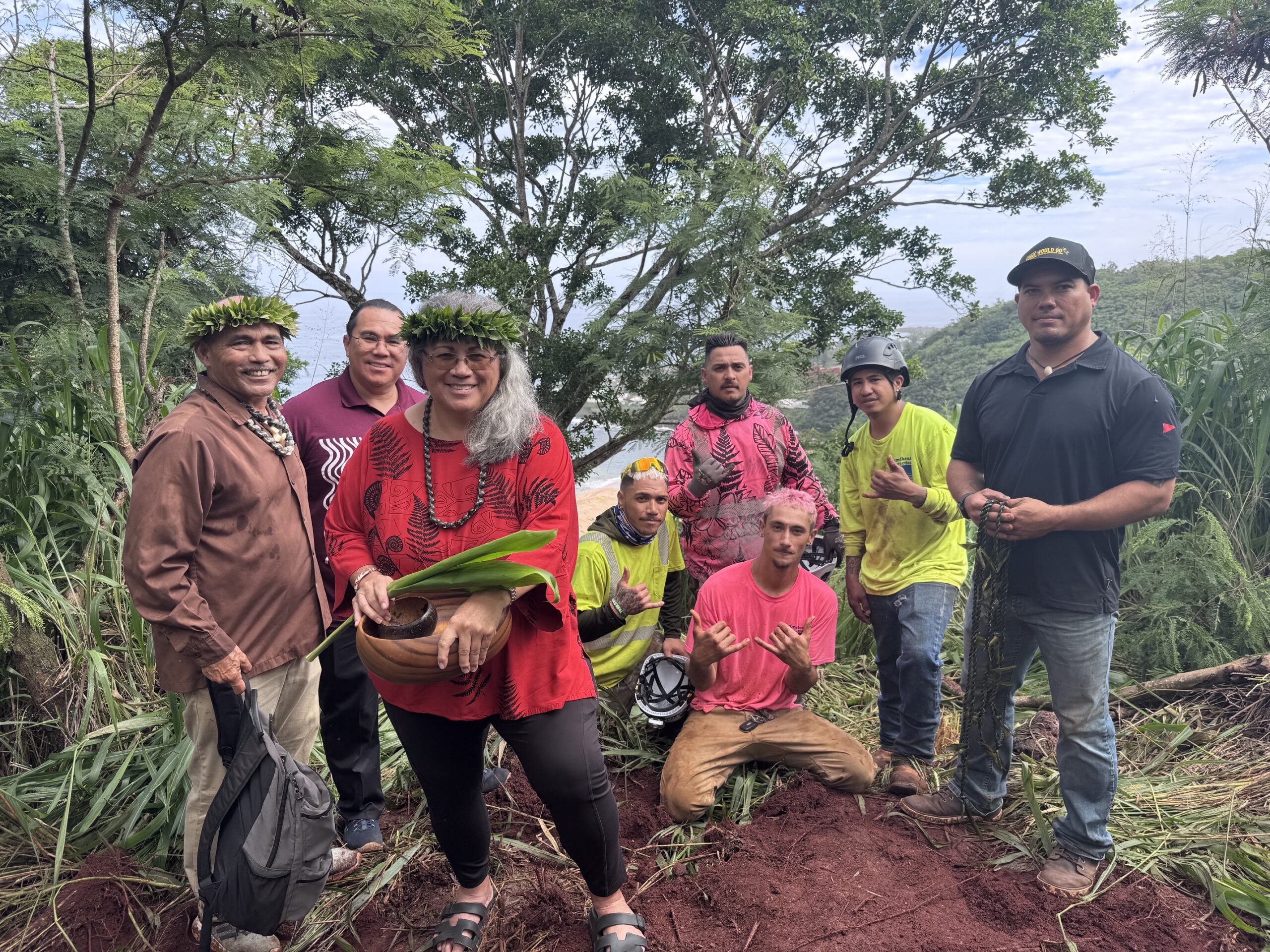
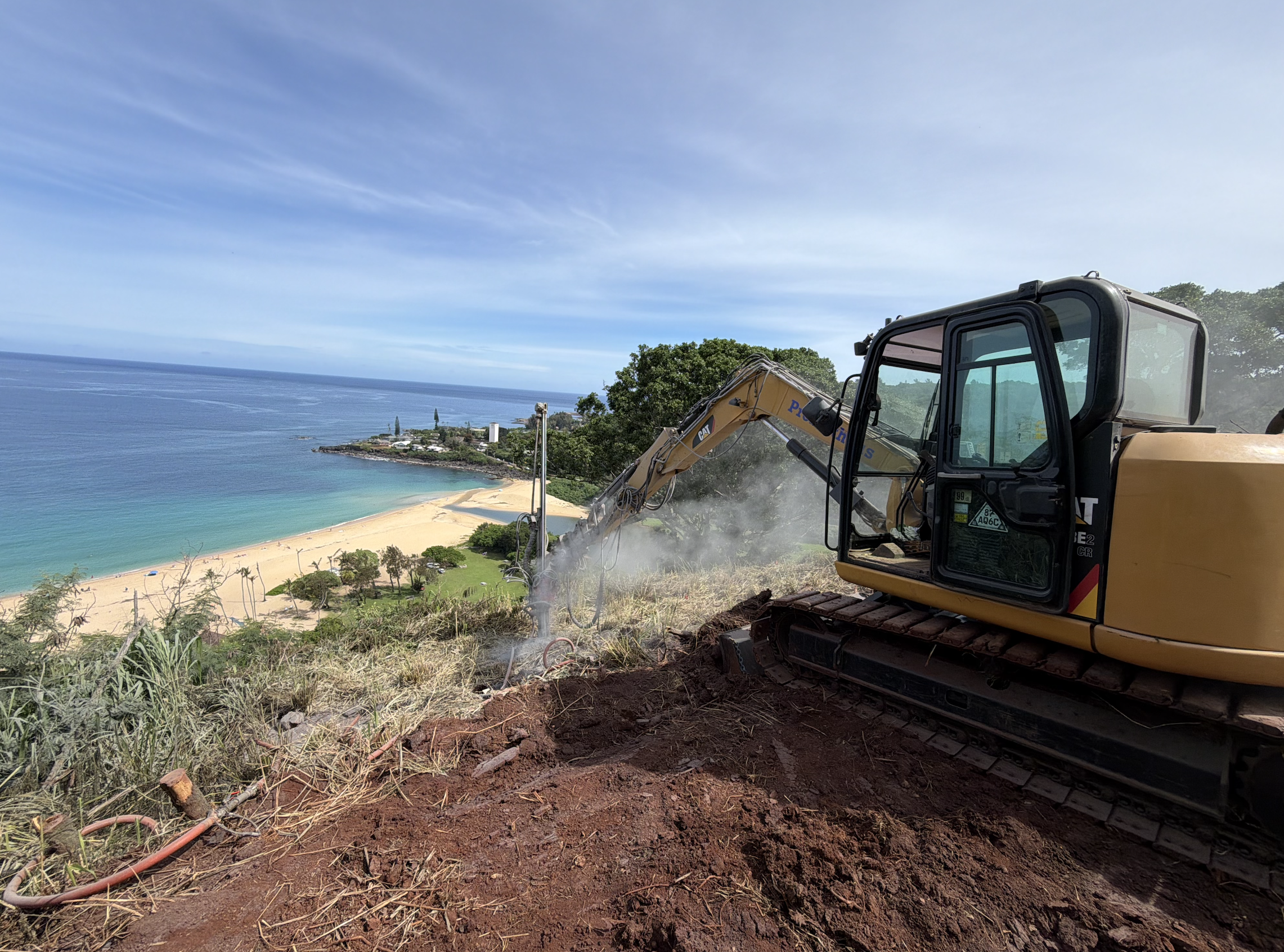
Our Prometheus Construction company happens to have the skill set and experience to be useful before and after some of our extreme weather events here in the islands. We work nimbly on steep slopes and know how to stabilize them. After the first Kona Low storm this year we shored up the fallen road side above Waimea Beach on O’ahu, repairing the slope after the landslide. Our Kumu Mālia did our blessing ceremony, recognizing that we were very near the sacred land of Waimea Valley, and to be mindful, treading carefully on the ‘āina, the land.
Just weeks later, a second Kona Low storm did even more damage, knocking huge, truck-sized boulders from the steep slope above the highway down onto the roadway itself. Traffic stopped completely. Fortunately no one was injured.
Our son Govi, Project Superintendent of Prometheus Construction, got another call from the DOT (Department of Transportation) in the wee hours of the night to come do more emergency work. The size of these rocks startled even him. The DOT representative instructed Govi to break up the boulders and haul them away.
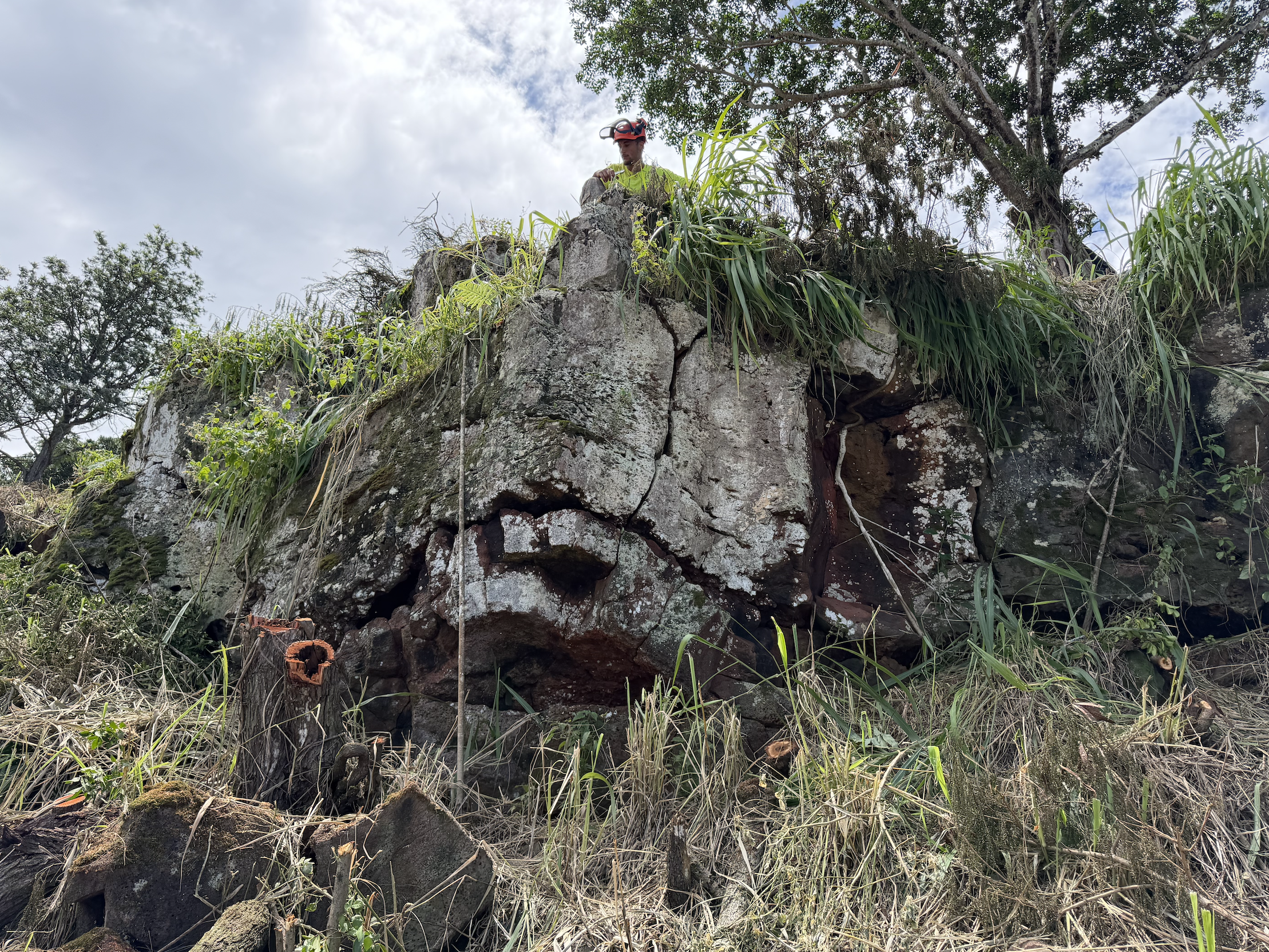
Fortunately, this was not Govi’s first rodeo when it comes to rocks. We at Prometheus Construction have sometimes had to learn the hard way, especially when employees have disregarded our instructions and dislodged or broken up rocks they shouldn’t have. Hawaiian elders and practitioners have let us know in no uncertain terms that we have been disrespectful of the ‘āina, which for us – as the owners – is the opposite of our intention.
So when Govi heard the directive to break up the rocks, he knew better than to follow that direction. He patiently explained to the representative that we all needed to exercise great caution when it comes to handling rocks. Community members agreed. Govi reached out to Waimea Valley administration to find out where they and the kahu, respected Hawaiian caretakers and cultural practitioners, wanted us to relocate the boulders to. (As an aside, that same DOT employee later came up to me at the blessing ceremony and told me how much he had learned about handling rocks from Govi, a much younger man than himself.)
By morning, the kahu had consulted with the boulders and amongst themselves. They directed Govi to carefully nudge the rocks up the road to a clear spot of land right at the entry to Waimea Valley. Our operators then used large equipment to transfer the massive rocks off the highway and onto the designated grassy spot.
Meanwhile, unbeknownst to us, five kahu of Waimea Valley wept for these stones.
We learned of that several days later when we participated in a second jobsite blessing ceremony at Waimea. Our work with the boulders had just begun. We now needed to shore up the entire bank of loose rocks destabilized by the heavy storm and threatening the highway below so that traffic could safely flow again.
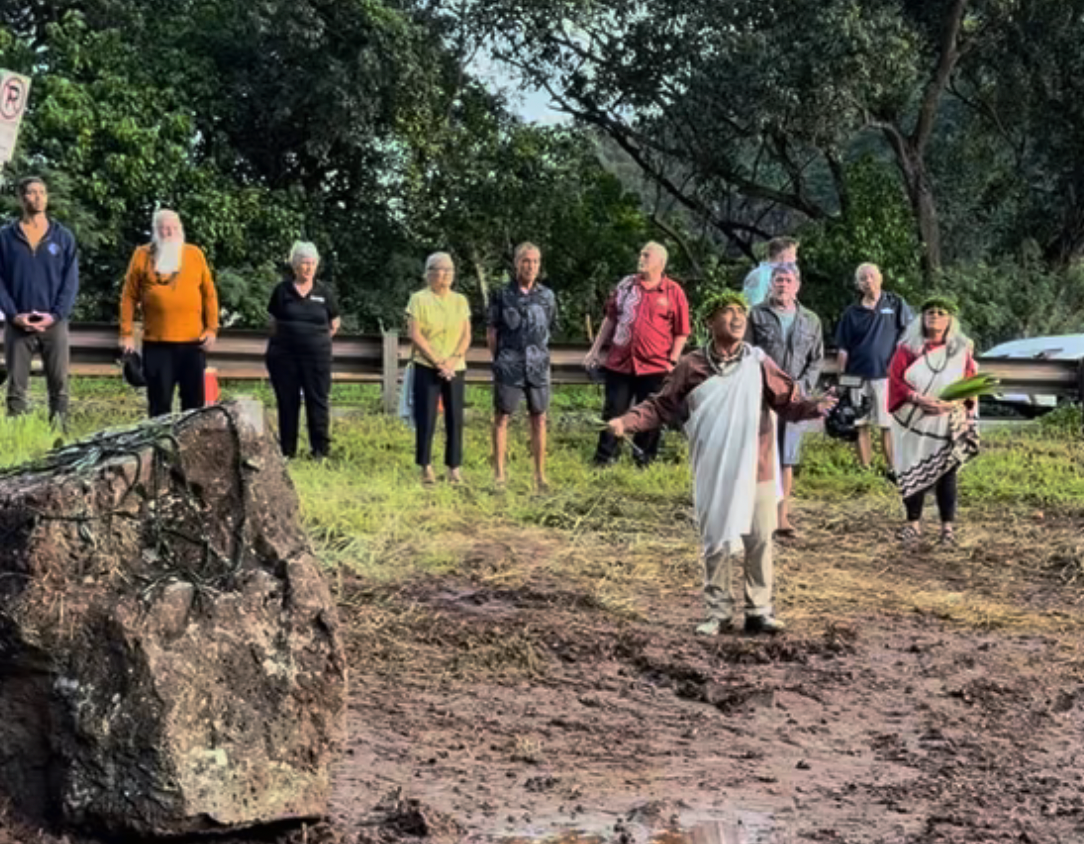
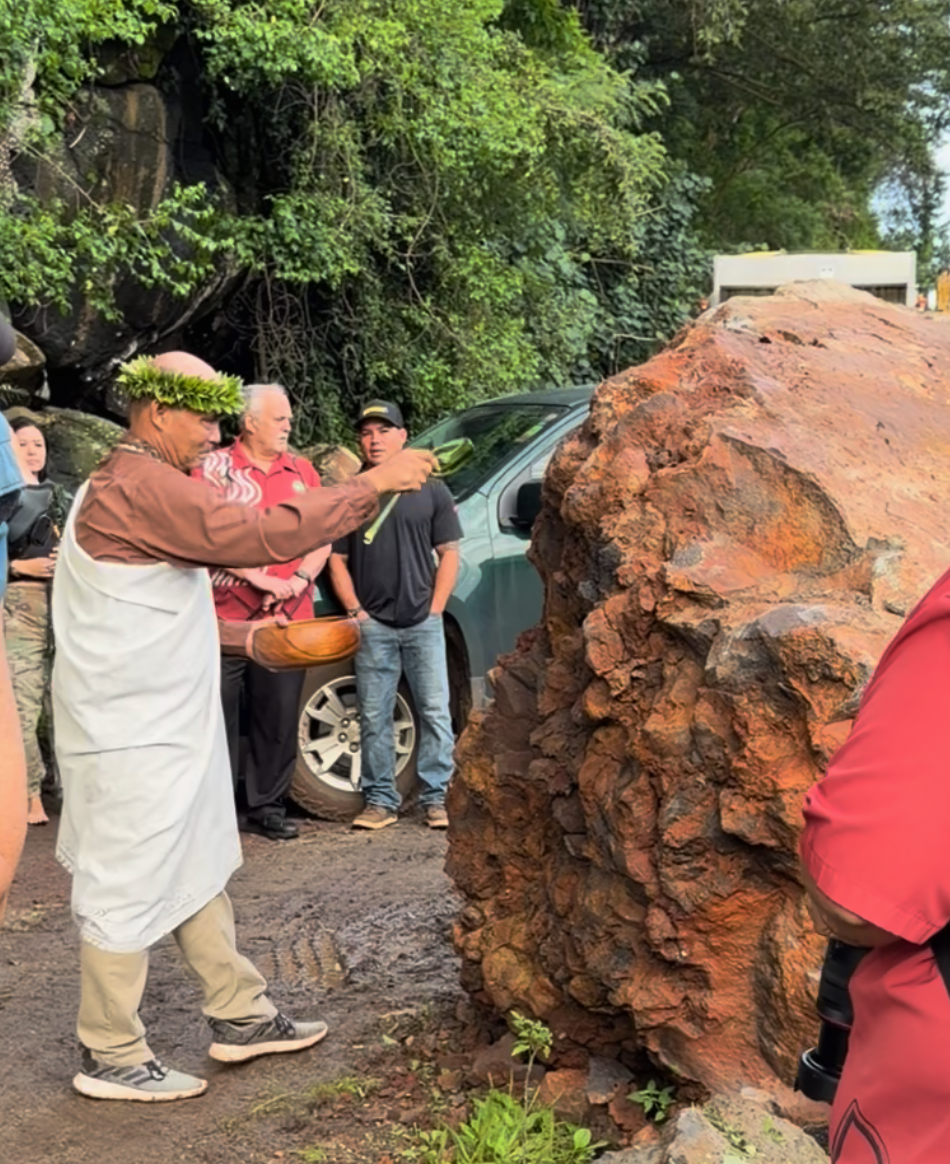
Together, the five kahu conducted the blessing, blowing the conch shell, taking turns chanting sacred oli. The kahu wahine (female caretaker) largely conducted the event, speaking to the Waimea Valley staff, the collection of government officials, the neighbors, Kumu Mālia, and a large construction crew from Prometheus.
Thanking all of us in attendance for coming, she helped us to understand the situation from the kahu perspective. “When these pohaku (boulders) fall like this, we get very emotional,” she began. “They’ve been sitting in their places for hundreds or thousands of years. When they fall, they get disoriented, they don’t know where they are, often times.”
“Disoriented”? A rock can feel disoriented? A rock can feel anything at all?!? And the kahu get emotional about that? This really was a different way of relating to a rock than I had ever considered or experienced. This kind of sounded like what I’ve learned about a human soul’s after-death state before they even realize their body has died. We’re disoriented by our new condition, as I understand it. Rocks can feel like that?!?
“So now we are welcoming the pohaku to their new homes, here at the entry to Waimea Valley,” summarized the kahu.
With that she initiated the ceremony of blessing all the fallen rocks we were gathered around, with each of us having the opportunity to use the koa bowl to sprinkle salt water on a stone or draping a ti leaf lei over a rock.
“And to finish, we will be blessing all of the machinery that will be used on site. These pohaku, you know, have been up there long since before there were any metal tools. So, we need to let them know that they are safe, that we are taking care of them with this equipment.” And the kahu duly blessed all of the machinery.
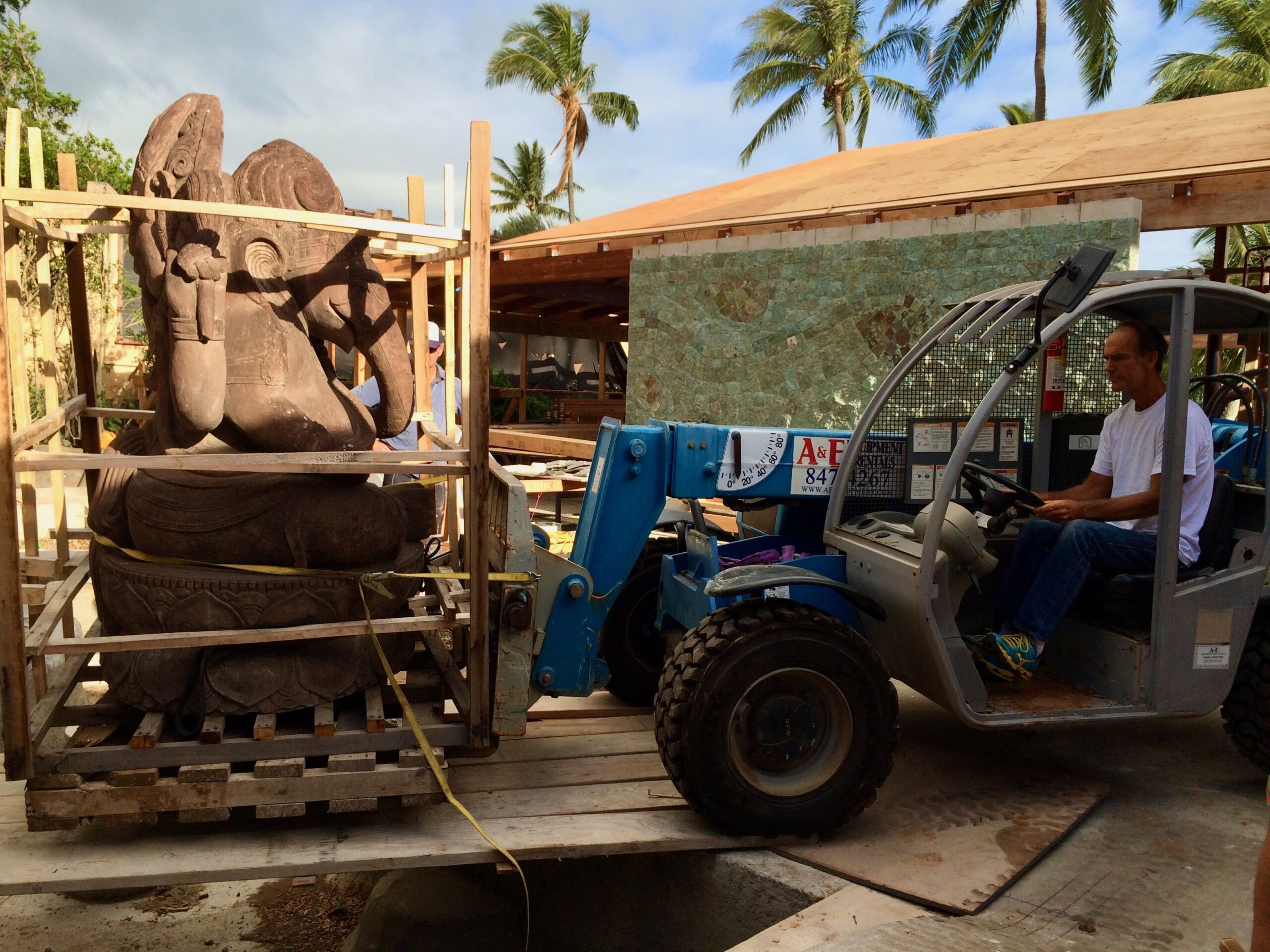
I’m sure my husband, Cliff, could relate to this feeling for a piece of rock. When we were building our house, we had a big, stone Ganesha statue shipped here to Hawai’i. The house took longer than expected to build, and Ganesh sat all the while in his crate in the neighbors’ back yard. It really tore Cliff up to feel as if Ganesh was locked in jail. I think he’s always had a feeling for the living heart of rocks.
So, what does all this weeping over rocks have to do with the mindfulness or meditation that we are all about at Still & Moving Meditation Fellowship?
Here we find stillness in the midst of motion. Once we approach that “still center” within ourselves, we begin to feel that living presence within everyone and within everything – even things from the outside which seem completely inert. At that point, we can begin to truly live with “reverence for life”.
A man is really ethical only when he… shatters no ice crystal that sparkles in the sun, tears no leaf from its tree, breaks off no flower, and is careful not to crush any insect as he walks.
– Albert Schweitzer
By Renée Tillotson
Director, Still & Moving Center
PS: View the story: Carving your Living Stone and Celebrating Debbie Rosas!

This post is also available in: