


Lineage Keepers
How many times have you watched someone be ordained?
To ordain is “to appoint or admit to the ministry”. The notion is “to confer holy orders upon.”
In my 70 years, I’ve never seen it. I didn’t know what to expect. When I think about it, before meeting Tony Bonnici, I had never met someone who had grown up in a temple, especially not in the United States. I feel privileged to have witnessed some of the steps that led up to this ceremony.
As early as Tony can remember, his parents’ home has been set up as a temple with people coming for dharma talks and meditation sessions. His father is a Zen roshi. He would wake up Tony and his brother every morning at 6 am to ring an enormous hanging bell that started the day for their family – and no doubt for the surrounding neighbors.
Temple life became a source of embarrassment for Tony as he grew older and went through the normal childhood and teenage stages of wanting to “be like everybody else” and wanting to rebel against anything his parents wanted him to do. As a young adult, he had broken dozens of bones in his body, having done Olympic-level judo and competed as a pro wakeboarder. He lived his life in the fast lane, working furiously to make a lot of money as quickly as possible. Tony was this guy who had not a particularly Zen approach to living mindfully!
His dad nevertheless saw a more thoughtful side of Tony and 21 years ago officially dubbed him with a Zen name as a lay member of his Zen tradition. Fine. Whatever. Tony didn’t have time. He kept rolling with his fast cars and frenetic pace of work.
Eventually, Tony experienced the crash and burn results that life in the fast lane is prone to produce. As a husband and dad, Tony eventually recognized the need to settle down, become the family man that he in fact was, and find a more sustainable lifestyle.
That’s just about the time I got to know Tony when I went to visit my Nia friend Amber, his wife, for the first in 2009. He was no longer working on flashy cars for millionaires, now winding down his failed businesses.
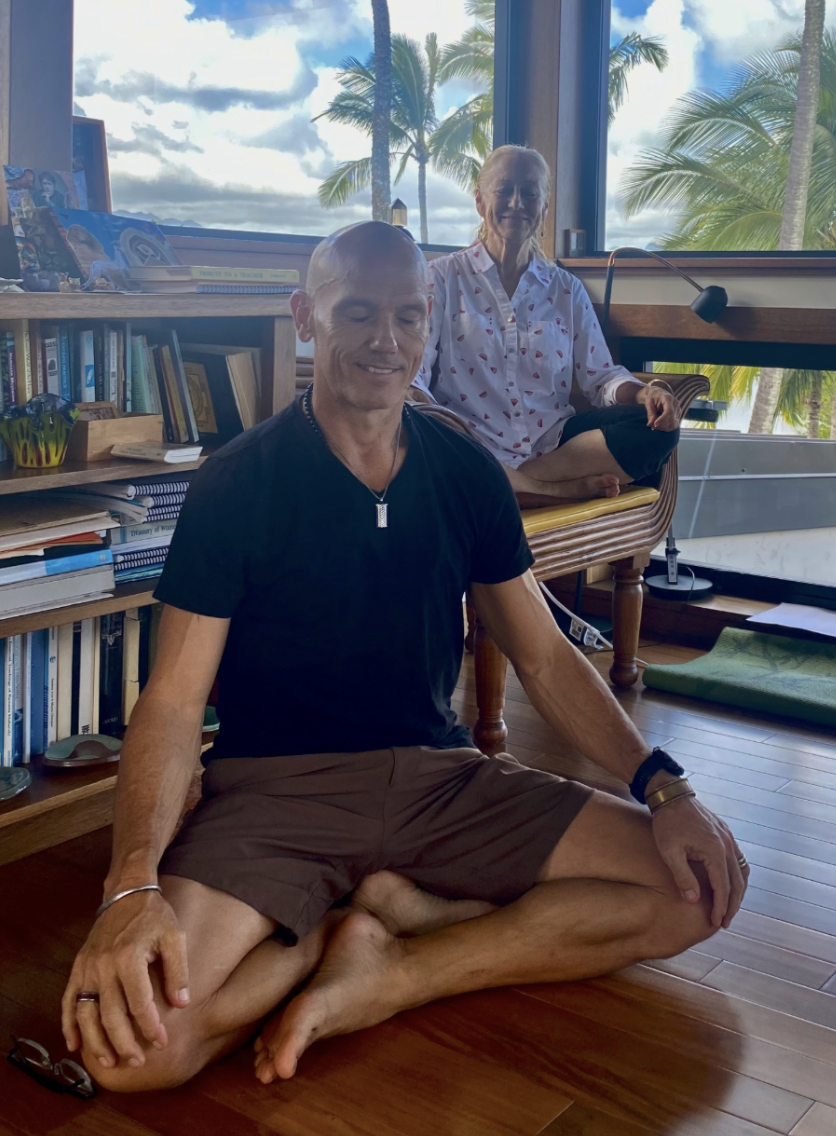
He began “sitting” for meditation in the mornings, just as his dad would have him and his brother do when they were youngsters. Tony was turning himself into a professional life coach. I saw Buddha and Kwan Yin statues keeping watch over a few corners of their house. But, you know, lots of groovy people have statues like that for decoration. They even sell this stuff at places like Home Depot. Nothing about him screamed: “I’m a Zen roshi in training!’
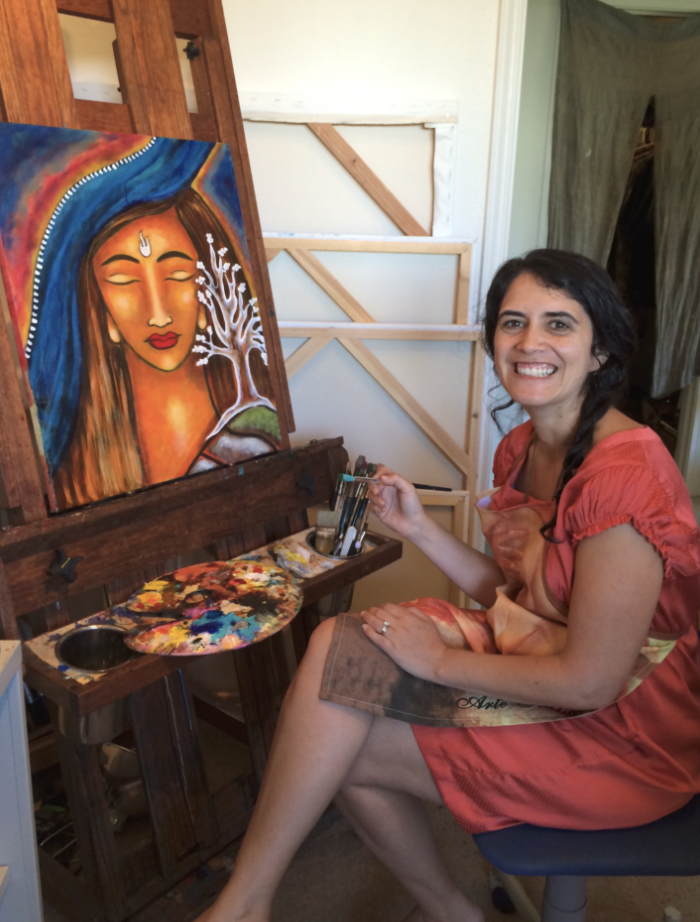
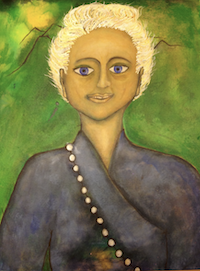
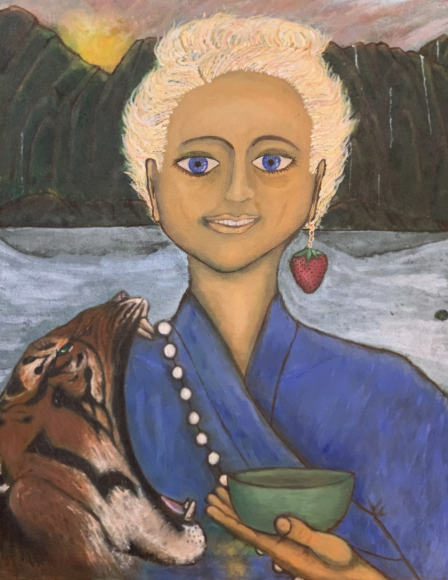
By the second time I met Tony, I had taken two painting workshops at Still & Moving Center with his wife Amber [see fish that talk article], but had been unable to complete my painting in the second workshop. I had painted a nun-like lady, and I left with the strong feeling she needed one of those empty begging bowls that such people use to symbolize humility. Using my paint brush, I turned the mountains behind her into a bowl surrounding my lady. Nope. I felt frustrated that I could not get my bowl concept to work.
I wanted to visit Amber anyway for a private lesson, so I packed up my unfinished painting along with a new canvas and flew to the Big Island, where they live.
Amber had already told me that Tony had grown up with Zen Buddhist parents, and the nun-like lady in my painting looked very Zen to me. So I unwrapped my incomplete painting in front of both Amber and Tony. I blurted out: “Here’s my painting that I just can’t get to work. She’s supposed to have one of those empty bowls that the monks carry. So see, I made some mountains into a bowl around her…”
My voice trailed off. Tony had inspired in me a sudden realization without even saying a word. I suddenly felt as if I were looking at the painting through Tony’s Zen eyes. I exclaimed, “Oh! I guess my bowl isn’t empty, is it?”
Tony smiled warmly and replied, “No, it’s not.”
I went on, “She’s in the middle of the bowl herself! So how can it be empty?”
“It can’t,” agreed Tony with a quiet knowing.
So, I undertook the difficult task of figuring out how to paint an outstretched hand holding a (truly) empty bowl, added a strawberry and tiger from a Zen tale, and – thanks to Tony’s silent influence – I finally completed my painting. Whew.
A couple years later, Tony successfully coached our older son through a very stressful period in his life by teaching him a Zen deep belly breathing meditation.
I saw how much help with calm and clarity Tony had provided to Shankar. Then when I recognized that I needed someone to talk me through my Still & Moving Center business decisions, I chose Tony as my business coach. I think something of the Zen approach appeals to me. There are no fixed answers, it’s the questioning and listening that counts. It’s the emptiness.
Tony has a receptive way of listening that creates the space for my own inner realizations. To Tony, my seemingly difficult situations are all opportunities for new discoveries. It’s that Zen “beginner’s mind” perspective. Tony’s been steadily holding the empty bowl for me since about 2015.
In the meantime, I’ve gotten to know his mom, Diana Bonnici, who attends my Gems from the Wisdom Traditions conversation circles. She’s also a beautiful soul and life coach who holds a safe, loving space for others. Diana had been a devout Christian when early in her marriage, her husband made a humongous life change. He became a Zen roshi – something between a priest and a monk. And she gradually adapted to this new life.
Tony’s mom and dad loved it when Tony began holding his own Meditation Sangha sessions for others last year. At his home with Amber on the Big Island, Tony now gives dharma talks and sitting meditations. In fact, we host his Tuesday evening sessions for Still & Moving folks to join online here.
A few months ago, Tony told me his dad had invited him to take up the family lineage and become a Zen roshi himself. “What?!? That seems like a very big deal. Are you going to do it?” I ask.
“Well sure. I think I’ve been preparing for this for a long time. It feels pretty natural,” he replies. And I have to agree. He has.
So Tony spends several months of intense training sessions with his father and mother, learning protocol and memorizing sacred chants in Japanese. Every time he goes to their temple home in Kawaihae, they all end up crying, so touched by what is about to happen in their family.
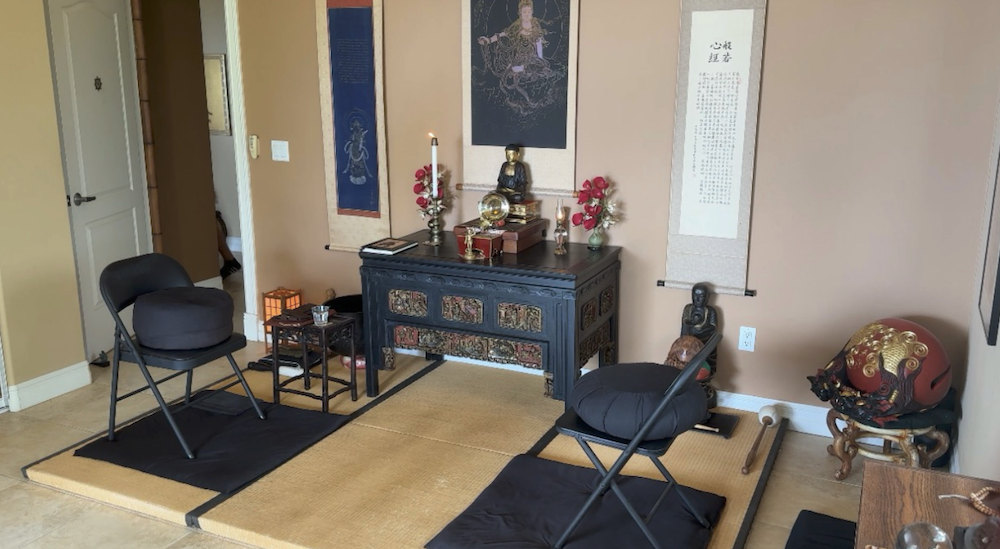
On the day of the ordination, Tony picks me up at the Kona airport. He’s remarkably calm for someone on the brink of entering such a sacred ceremony. That’s Zen training for you, right? Arriving at Tony’s mom and dad’s house temple – immaculately clean, organized, well designed, not large but spacious – I immediately feel grounded by its serenity. Beautiful artwork and statues calmly keep the space.
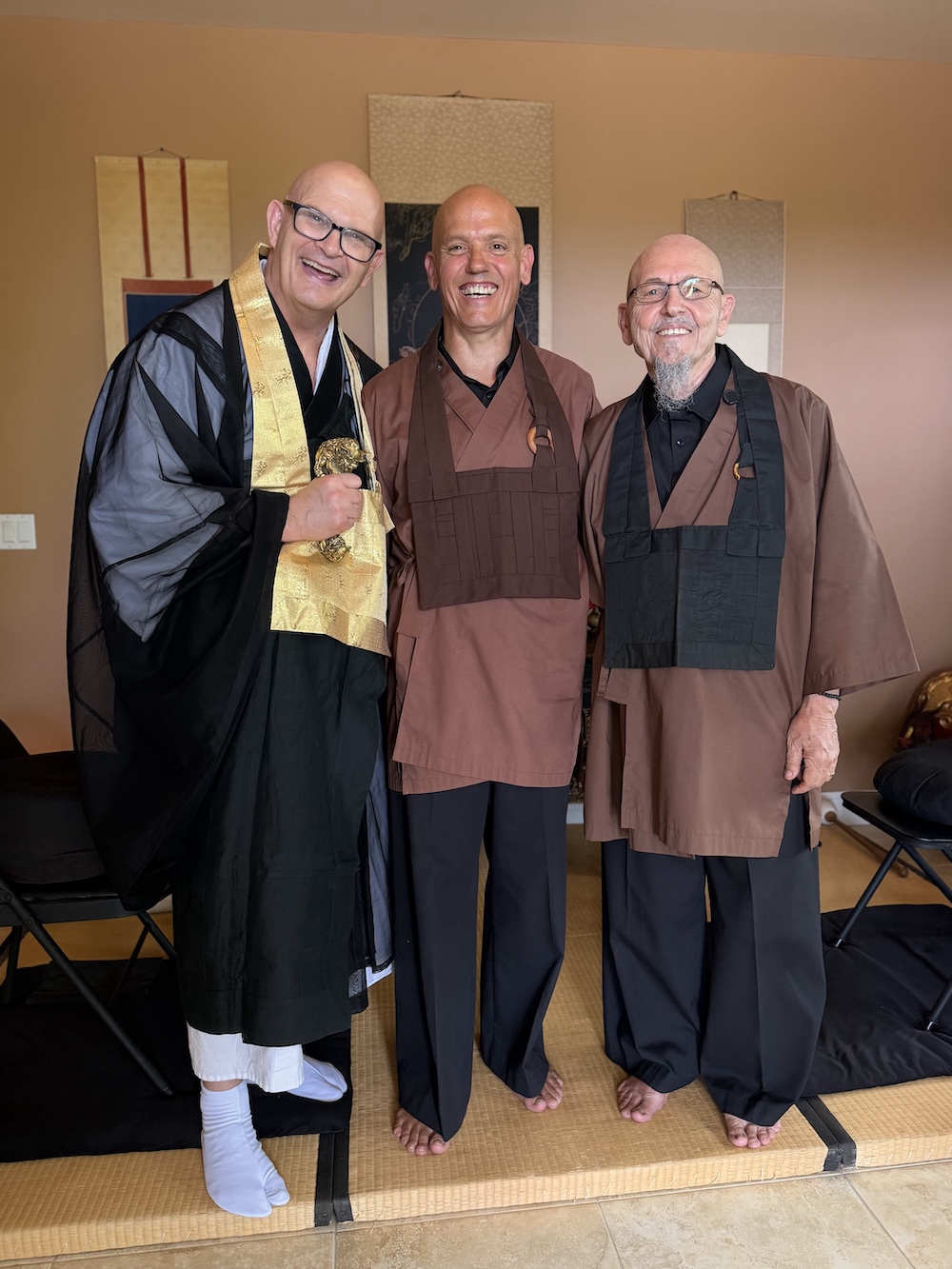
When it’s time for the ceremony, Tony’s mom conducts us into the temple room with an altar. Amber, their son, and five of us guests take our seats on floor cushions. One of the guests wears his charcoal-colored priestly robe as a roshi from another Zen Buddhist tradition.
Tony’s mom Diana starts the ceremony by striking the same three-foot tall bell that they wake up to each morning. Tony and his father each enter wearing the simple brown Zen robes of their tradition. The father speaks, explaining the meaning of the ceremony. They go through chanting and vows, culminating in Tony taking the bodhisattva vow to be of service to all beings for all time. Just the thought of the vow makes me shudder with its profundity. It’s huge.
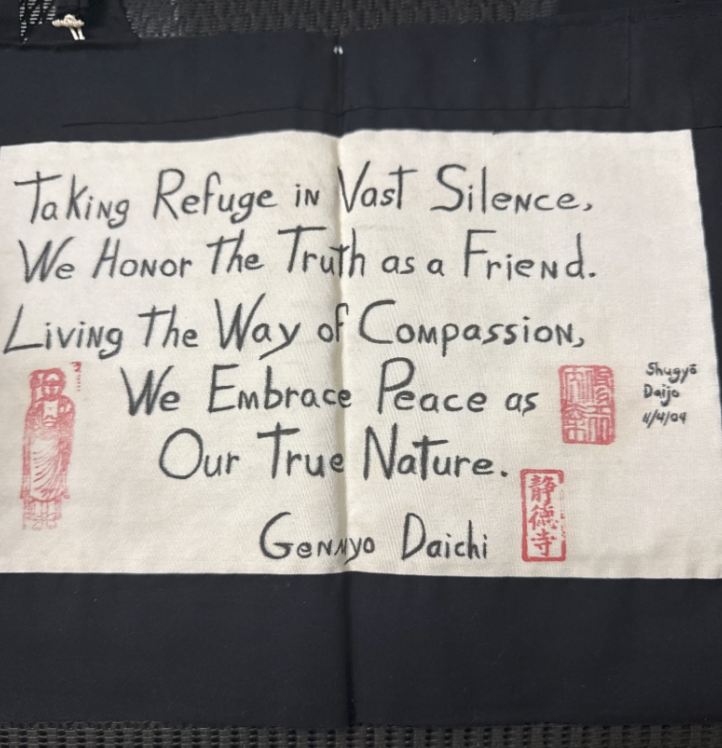
His father ordains Tony with his roshi name: Seijaku Issan, meaning “upright stillness”. How apt as a name to grow into.
Now his father is about to gift Tony with the ceremonial “nyoi” stick that he found as a piece of redwood outside another Zen temple decades ago. The father tells how he crafted the wood by hand into a traditional “nyoi”, and how it has served him in his duties as a roshi ever since that time. I can tell from the way he’s holding and talking about it, how much spiritual energy he has invested into this now sacred object.
Tony, his dad, mom, and wife already have tears brimming over by this time. I am still “dry”. But when Tony’s dad hands over his beloved nyoi stick to Tony, my eyes spill over, too. It’s such a potent symbol of the entire lineage of teaching that the father is entrusting his son to move forward.
The ceremony concludes. We can all now take photos, enjoy food, and congratulate the family.
And that, my friends, is the first time I have ever been blessed to witness an ordination ceremony, father to son, passing down a sacred tradition. I feel proud of my friend for opening himself to the depth and honor of a lineage he’d spent a long time rejecting. It feels as though the whole world is a little bit better place because of this transmission.
Get the Still & Moving App
This post is also available in: