


By Doris Morisaki
Rolling and Rollicking with the Ramayana
Note from the Director: Please enjoy our story “Rolling and Rollicking with The Ramayana” by my guest writer, Doris Morisaki!
– Renée Tillotson
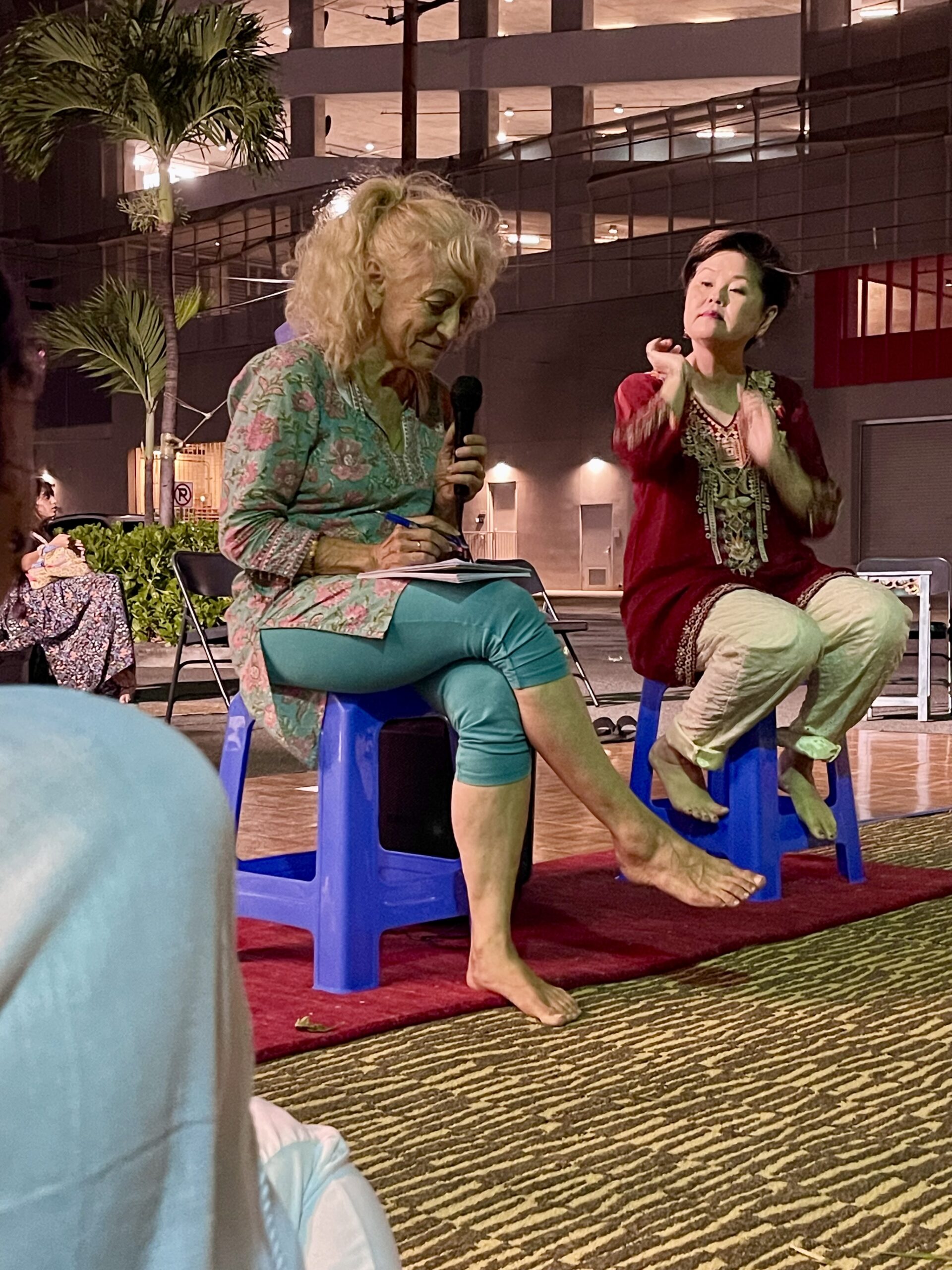
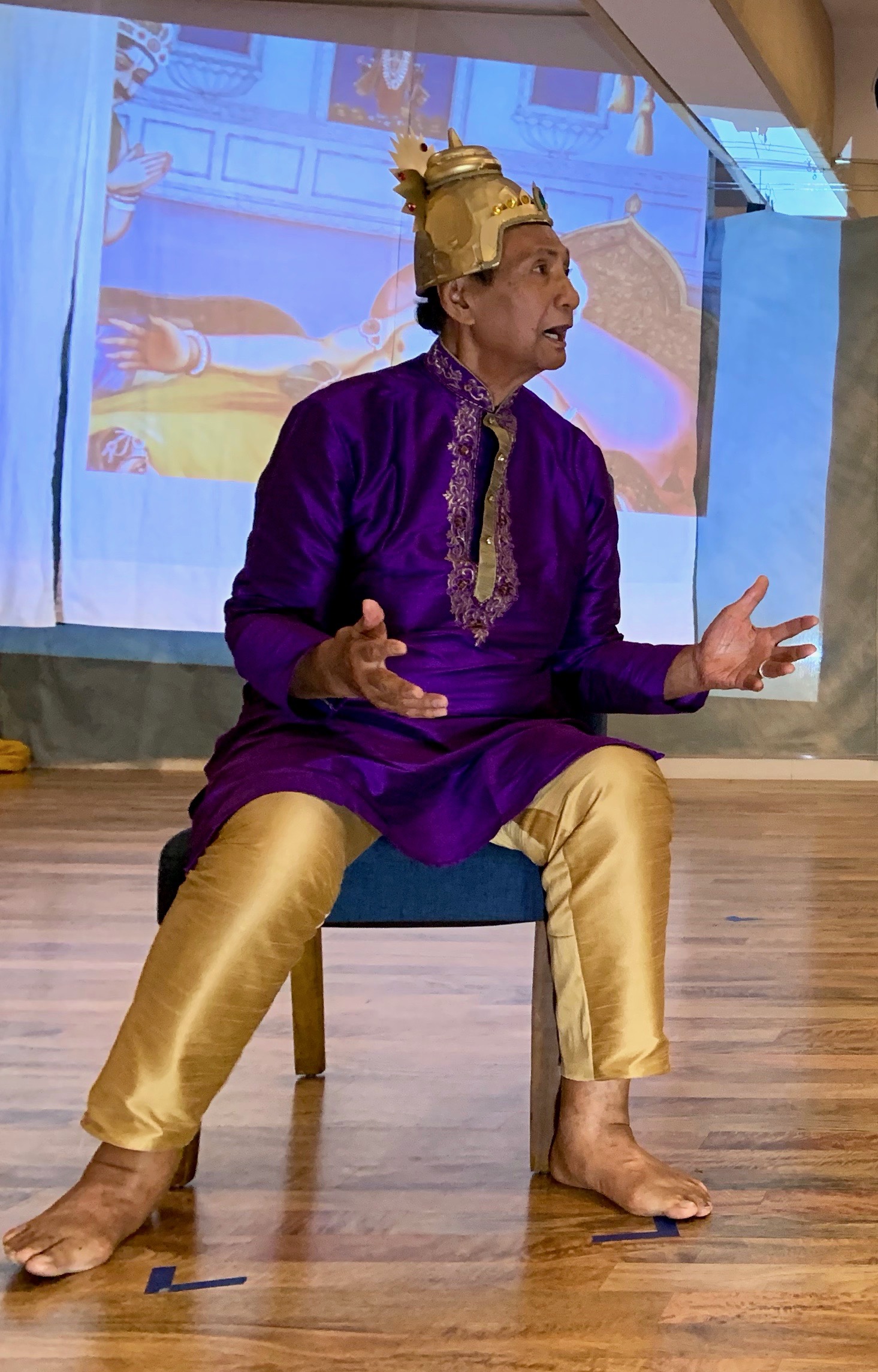
Twenty minutes before showtime at Still & Moving Center’s 2017 Diwali play, the lobby buzzes with excitement. Cast members and staff scurry around, tying up last-minute details. In the middle of it all, our director and narrator Renée Tillotson hands me a sheaf of papers, smiles sweetly, and says, “YOU be the narrator tonight.”
My eyes fly open in shock. “What?!” I manage to gasp as I pick my jaw off the floor and rifle through the script for the Ramayana. Yes, I have read out the lines during rehearsals as Renée directs the actors, but stepping in as performance narrator feels completely different. However, I love the limelight and am a performer at heart, so I gamely step up to this unforeseen change of plans. Finding no chair easily available, I plop down on the floor, glancing at some of the lines for the very first time as I do my best to bring the story to life.
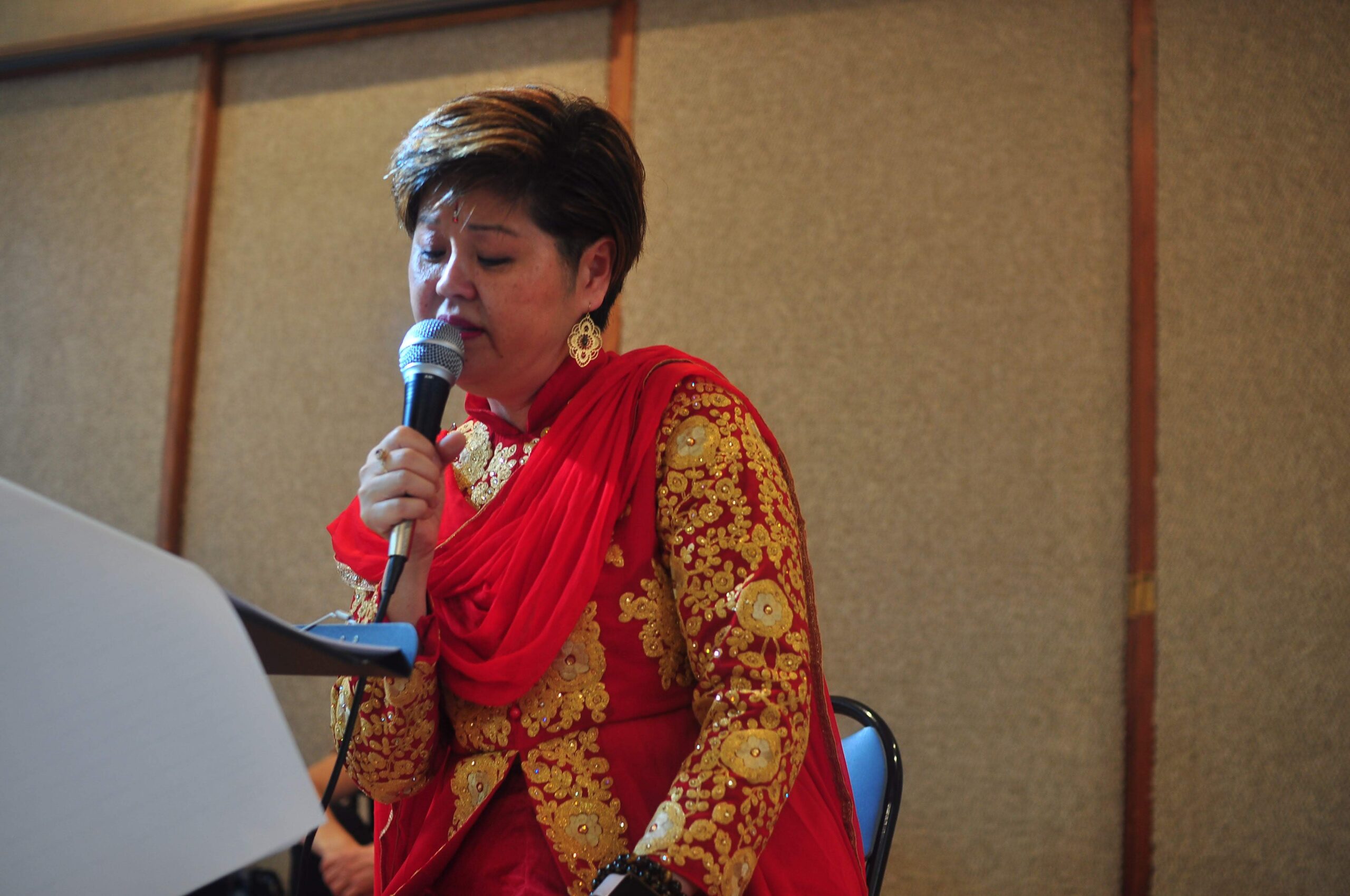
Every year since then, Renée has asked me to narrate the Ramayana, so I guess I did a decent job at my debut performance! This year marks my twelfth time participating in Still & Moving Center’s Diwali play: three years as a hula dancer and nine as narrator. I DO love changing the sound of my voice for every character, which the audience seems to appreciate.
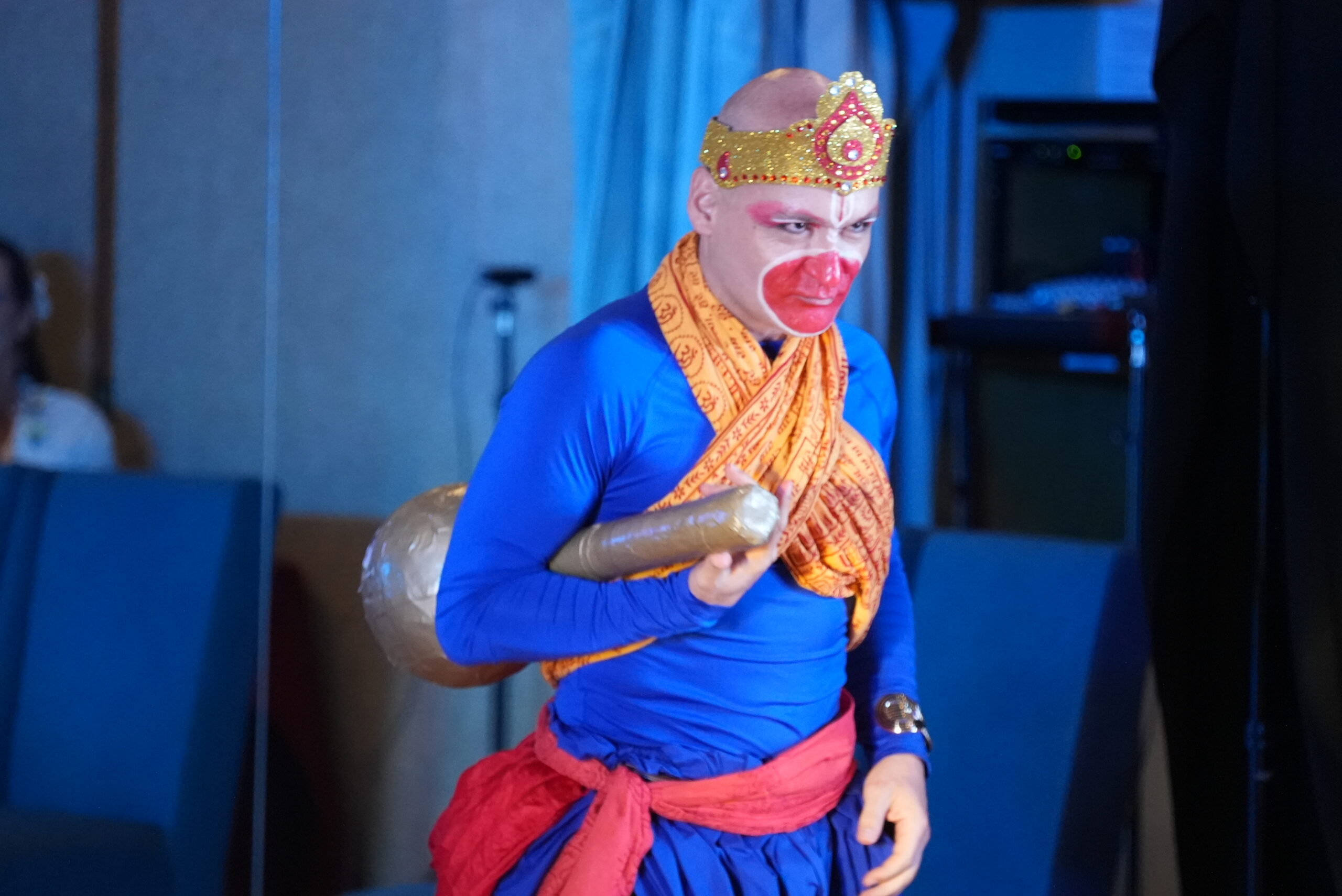
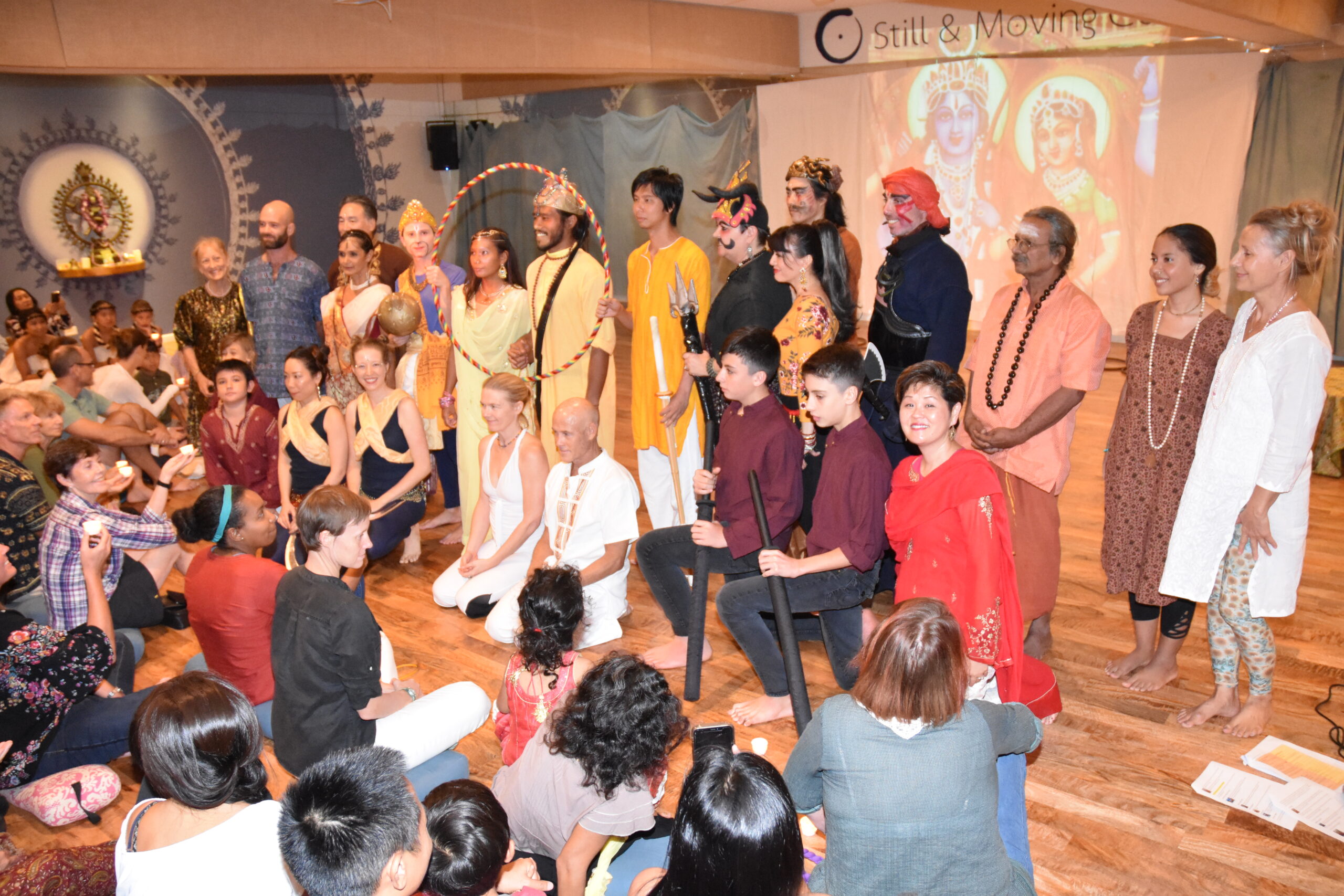
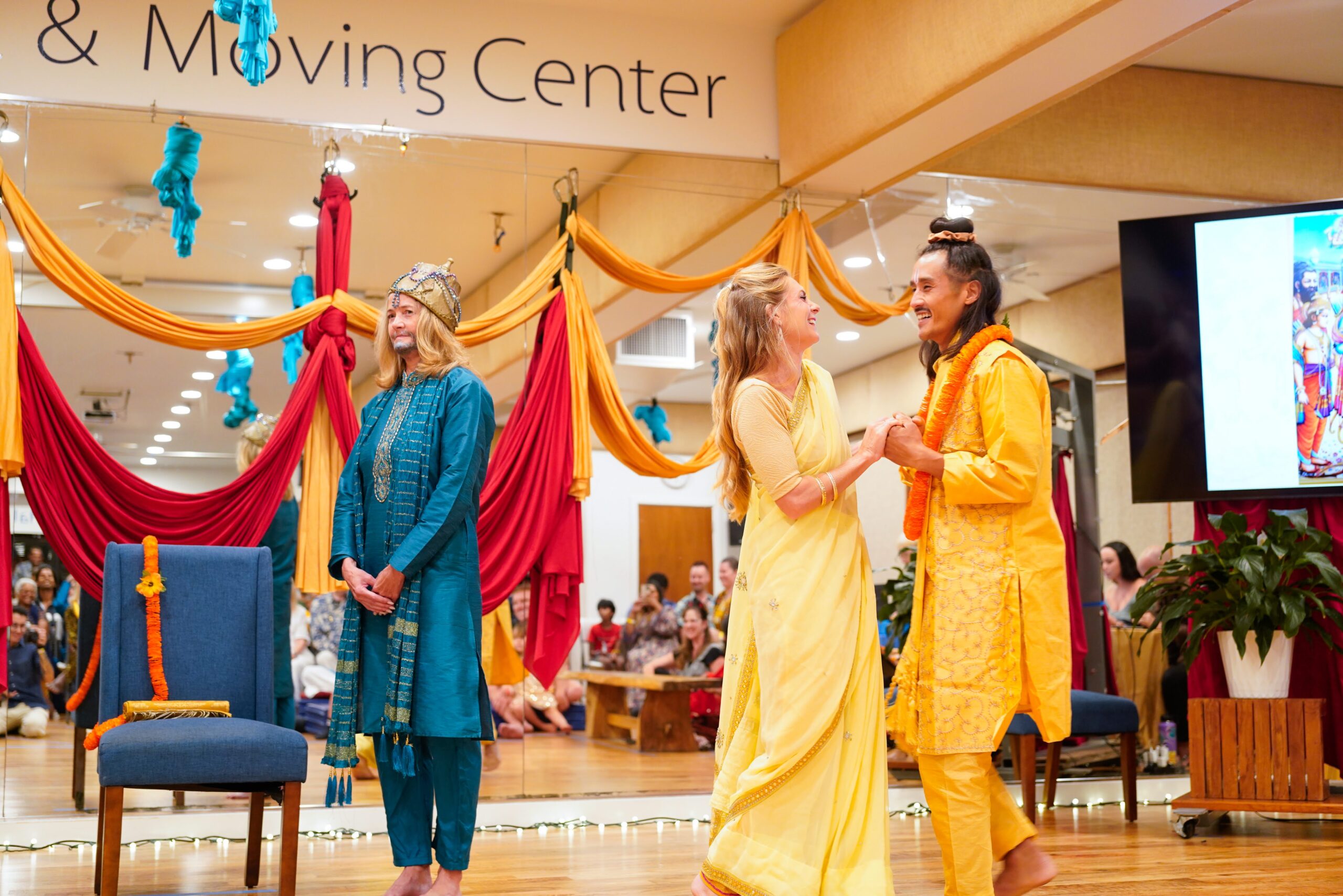
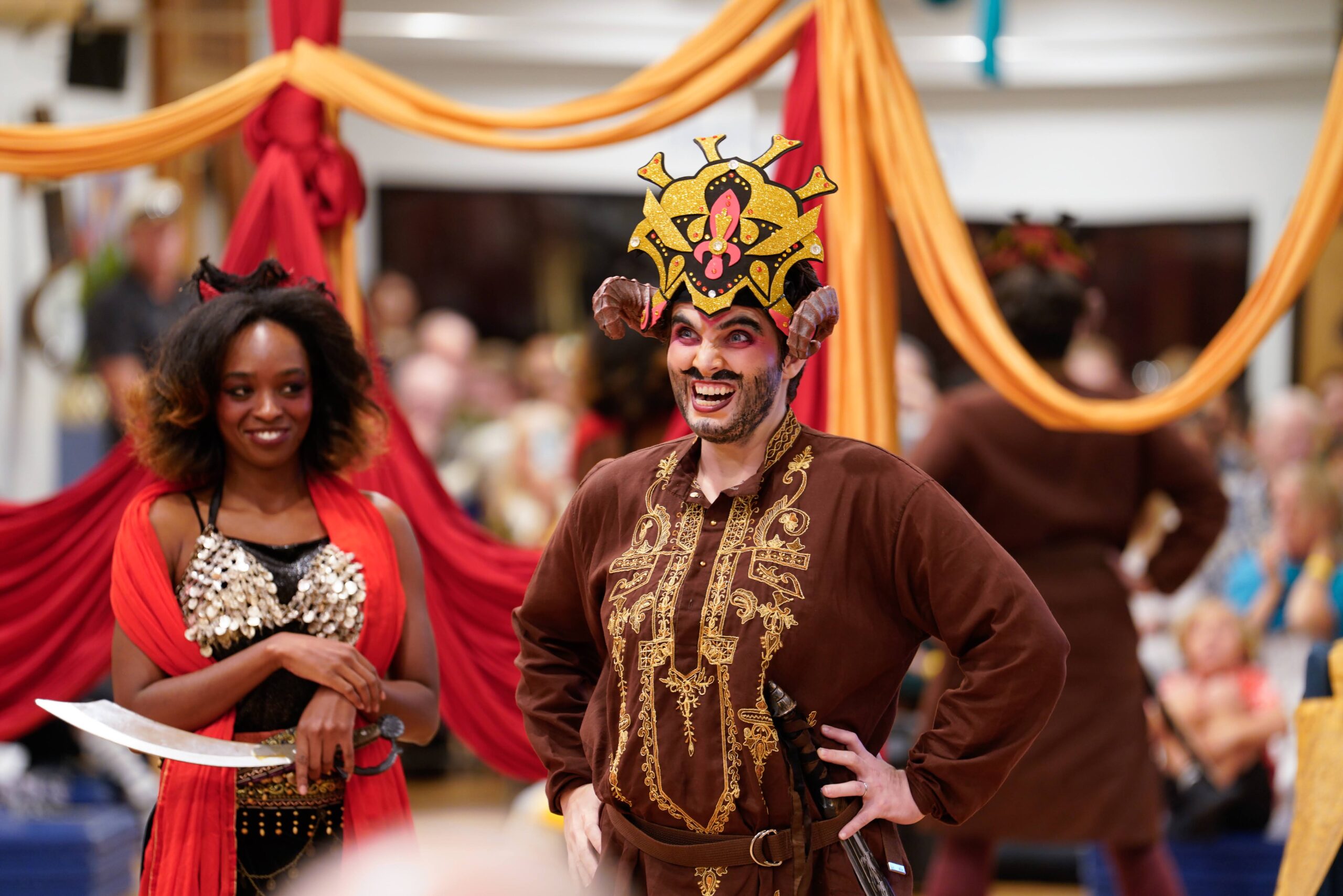
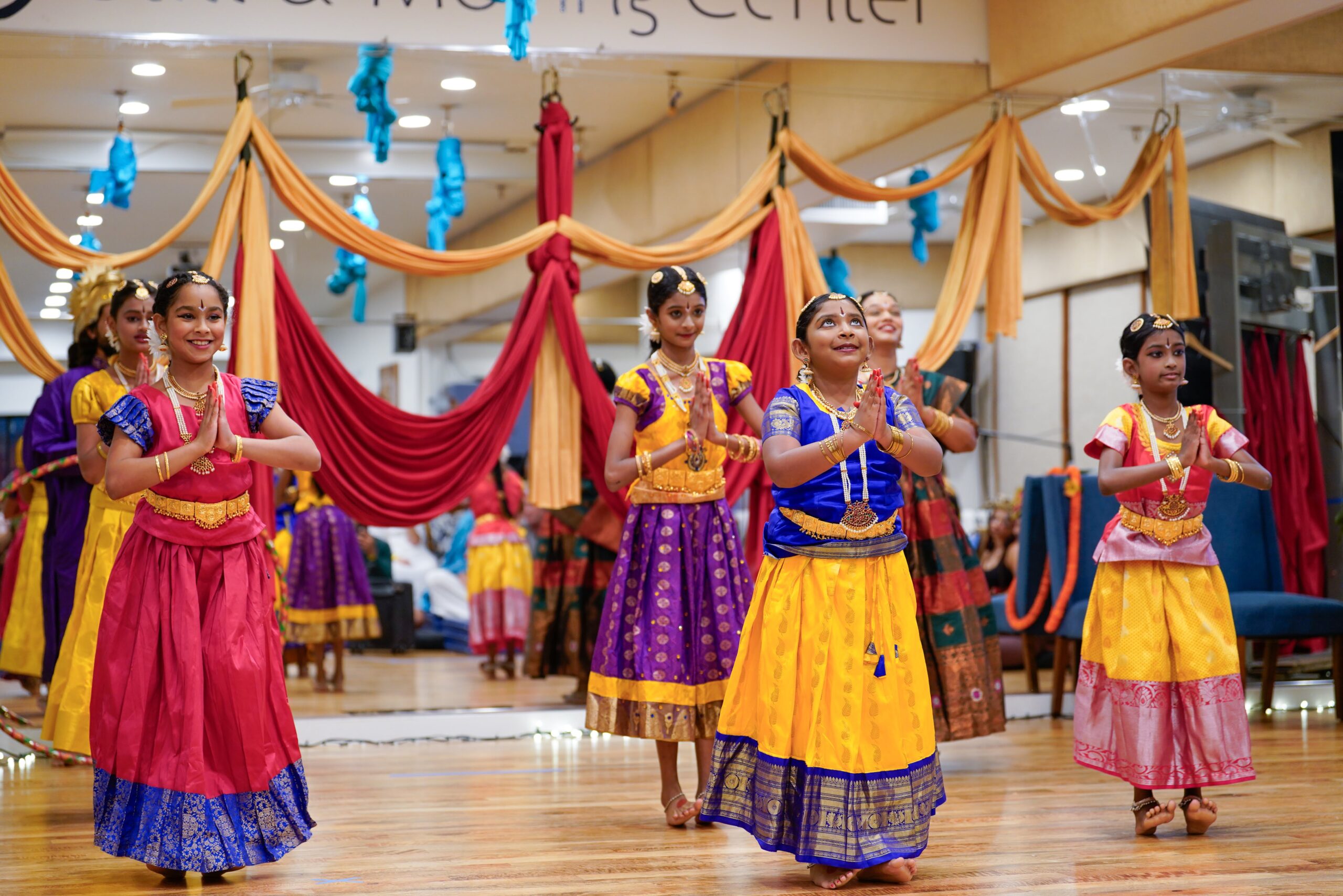
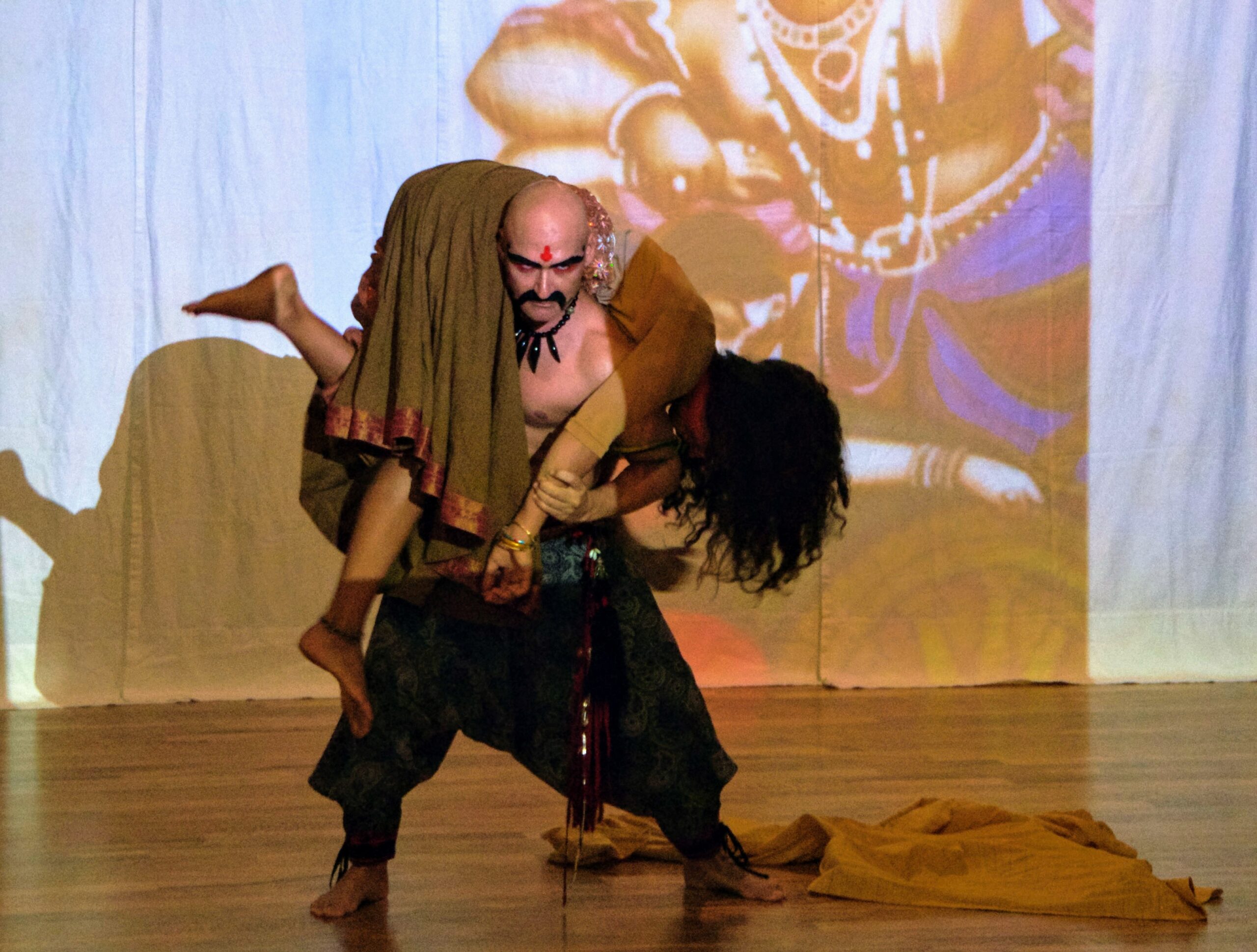
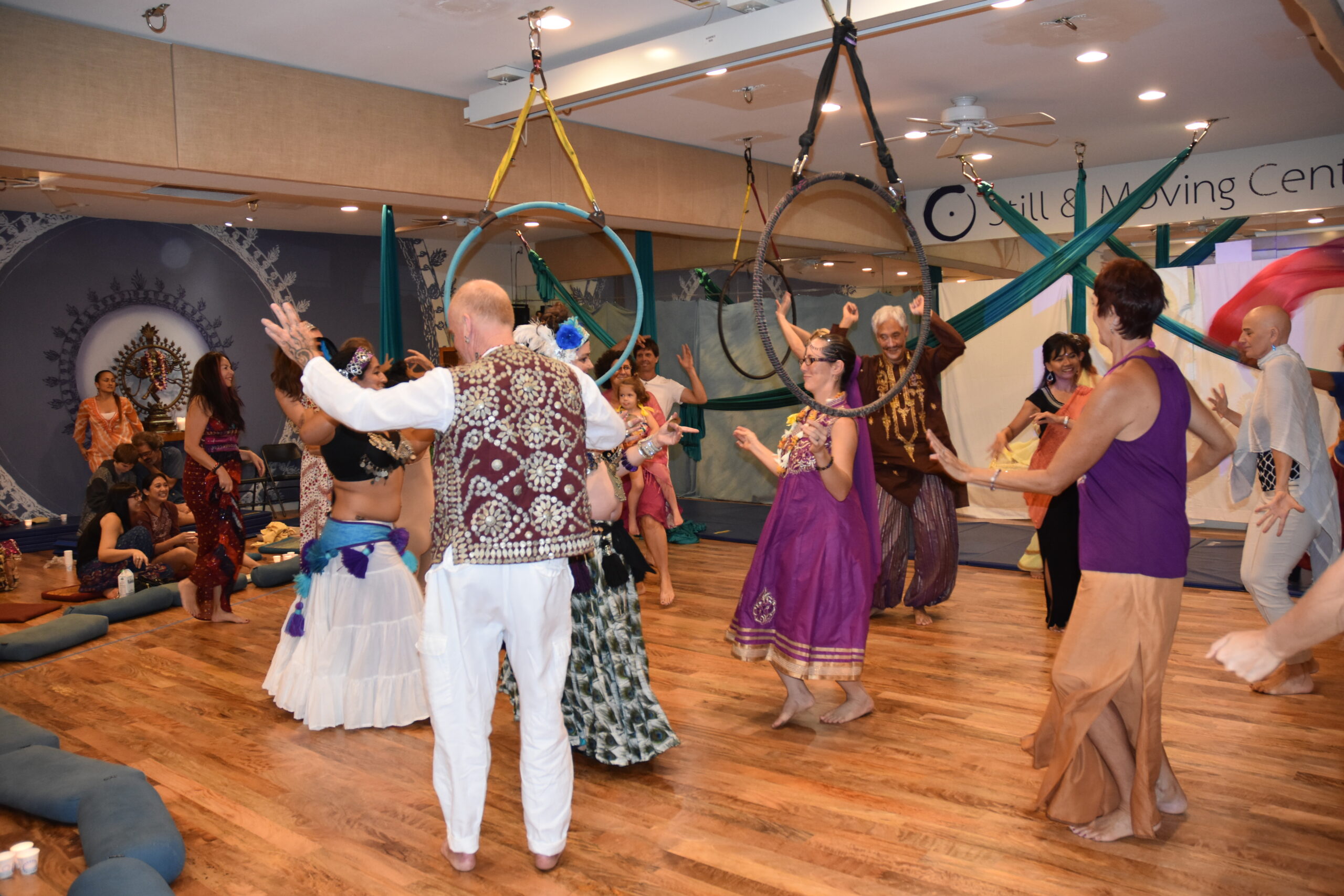
Diwali shines as our studio’s biggest annual event. We celebrate this Indian festival of lights by retelling the Ramayana, the world’s oldest epic, which spans 24,000 Sanskrit verses. We now condense the story into a vibrant 90-minute production, enriched by many of the studio’s class members and instructors. Kings, a queens, princes, a princesses, a monkey warrior, and a demon king — the tale overflows with color and drama. I marvel at how the play has grown richer every year.
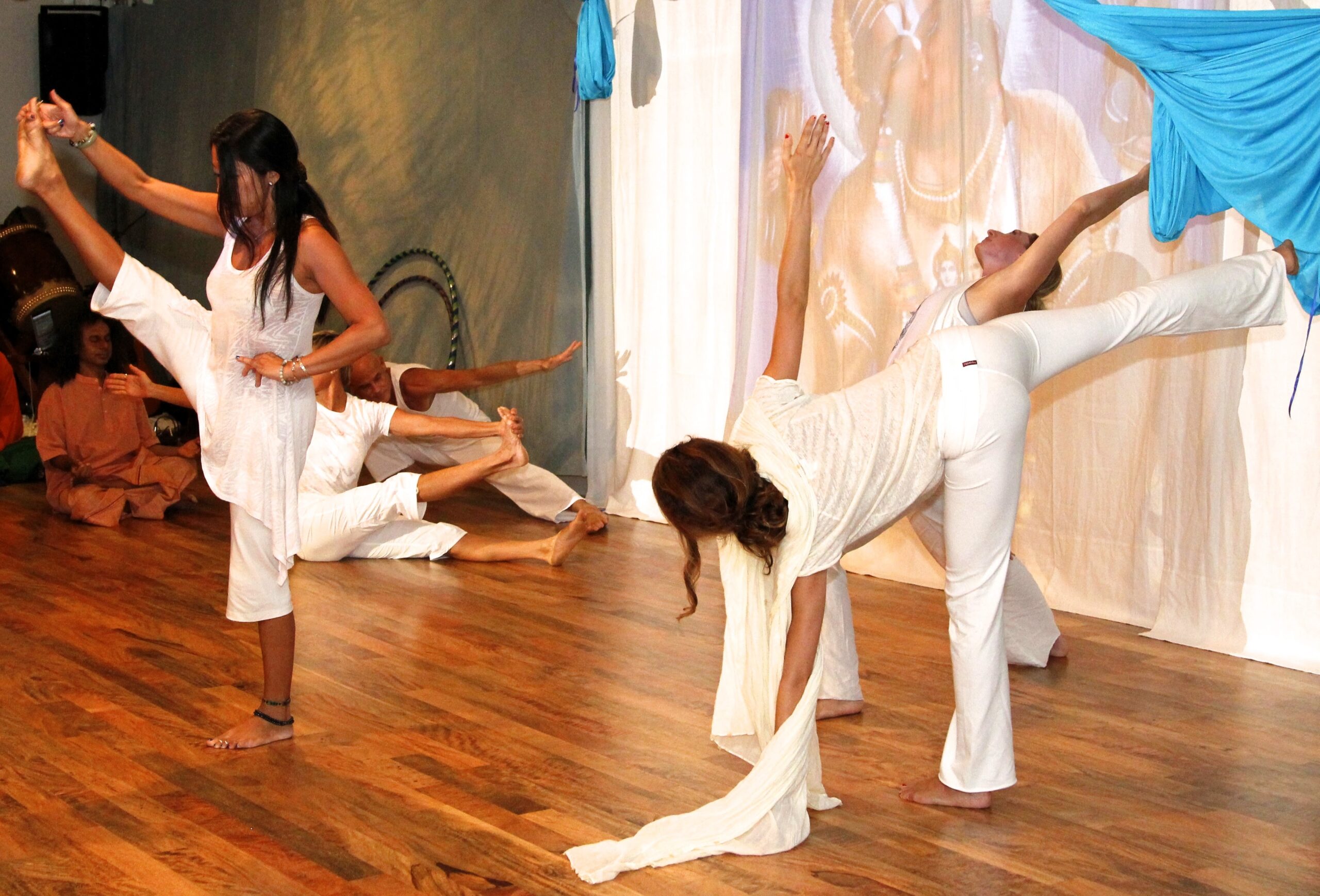
The first two years, starting in 2011, Renée simply told the tale in a cozy way, with her audience gathering near. In year three, we traveled with tents to Sooriya Kumar’s Mouna Farm Arts and Cultural Village in Waianae, where she told the tale around a campfire, just as cultures have done for millennia. By year four, Renée realized she had a studio full of beautiful movers of many disciplines, and this is the tale that deserved our dancers, yogis, martial artists and aerialists depicting all its dashing, swashbuckling scenes.
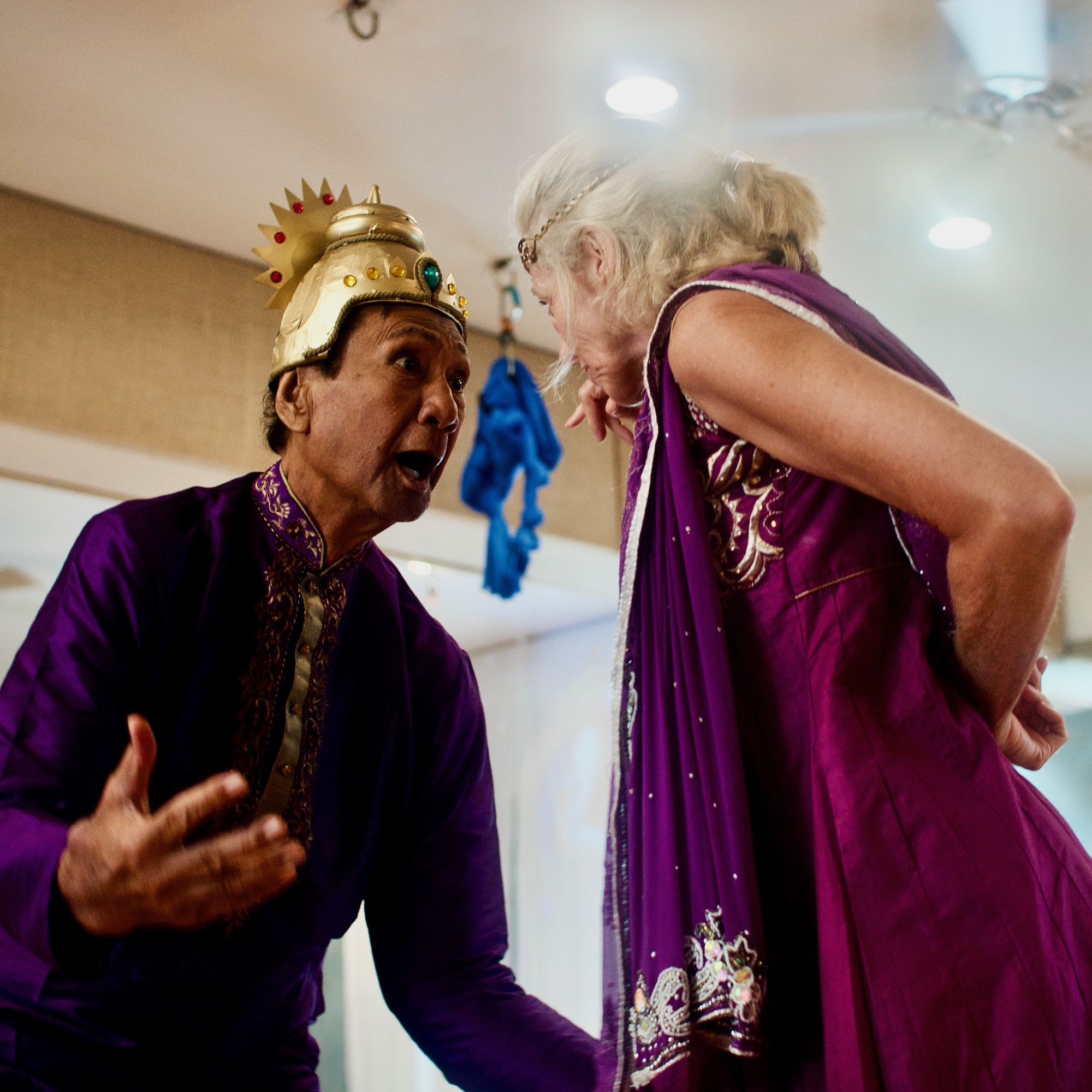
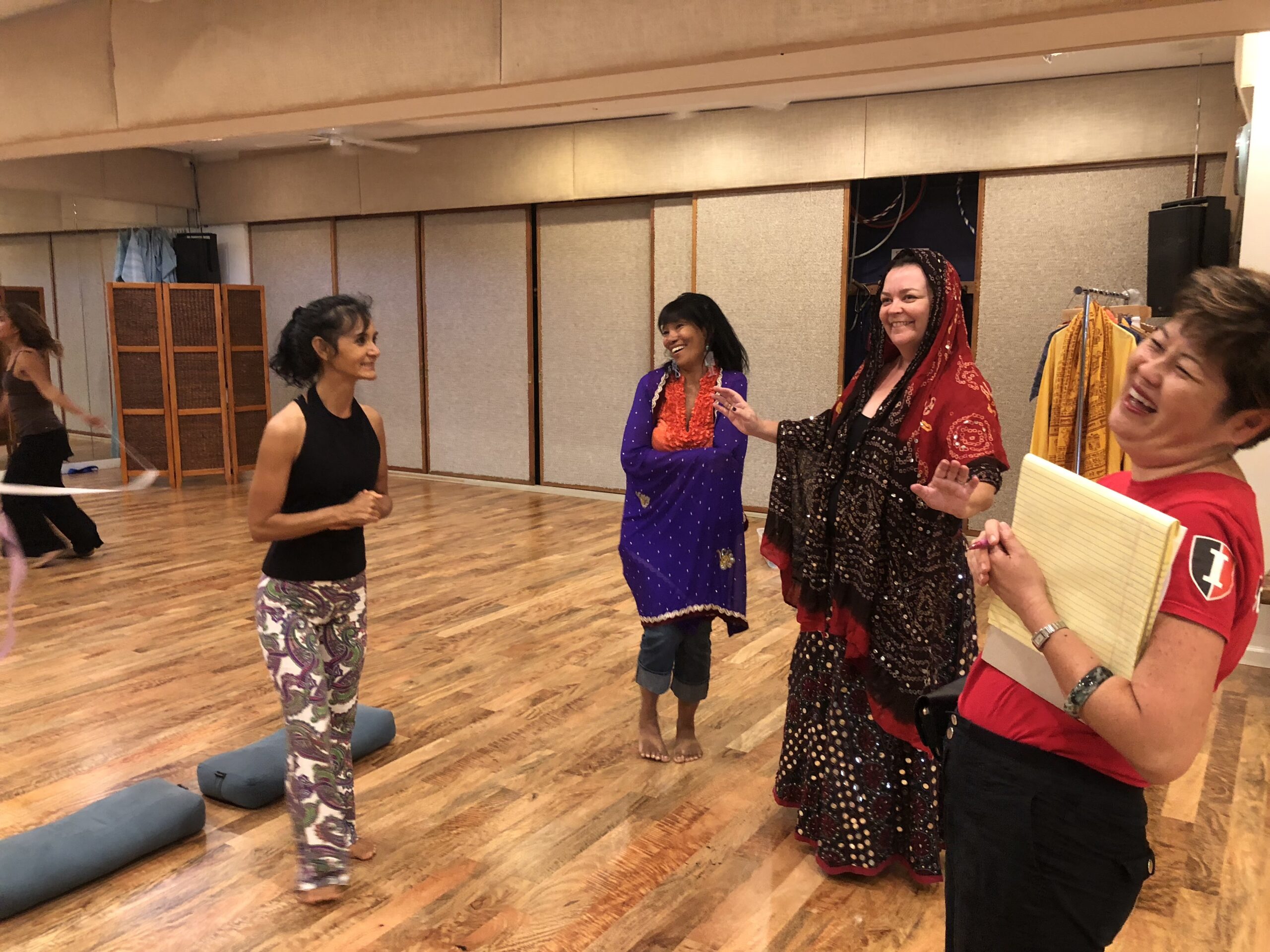
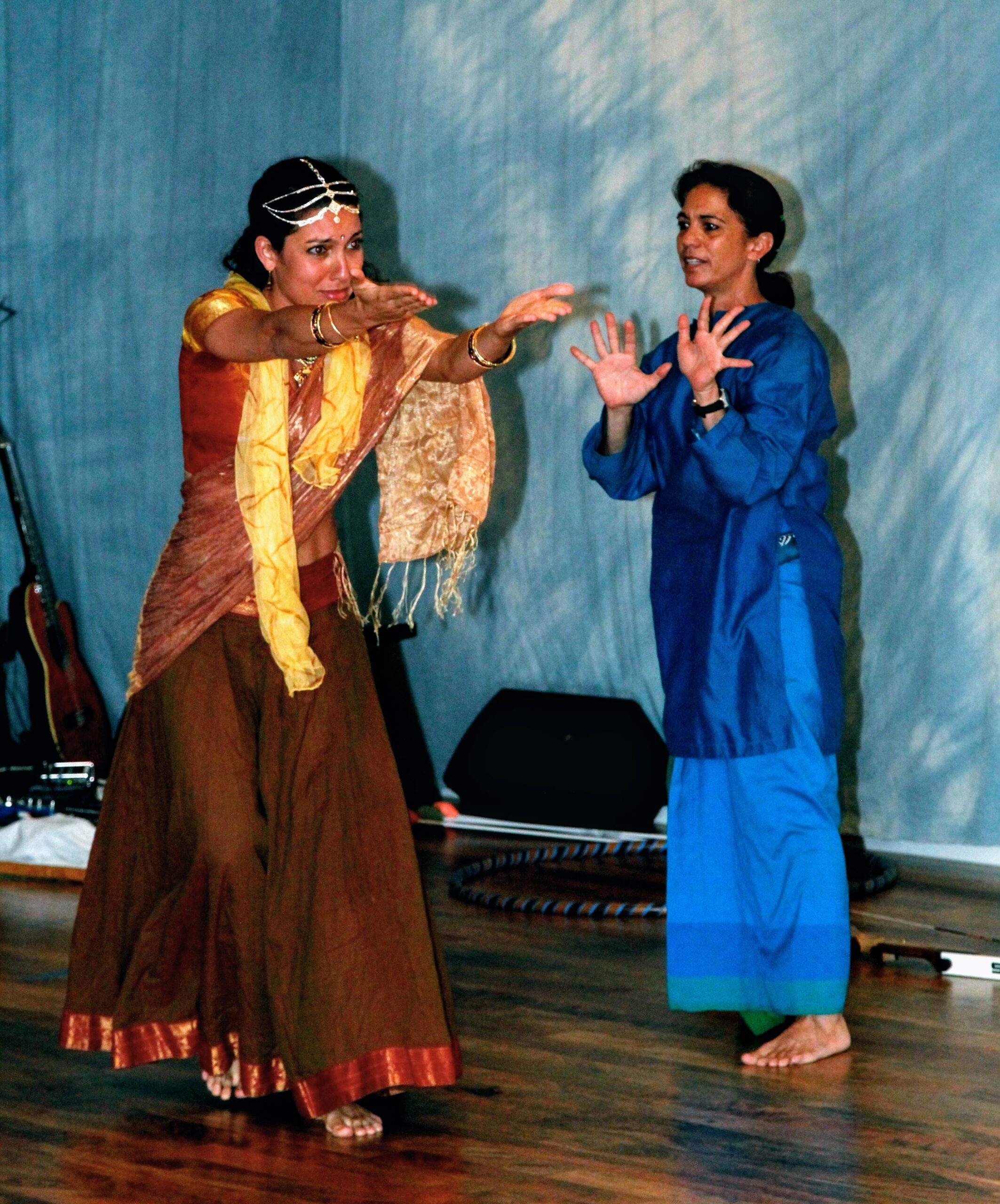
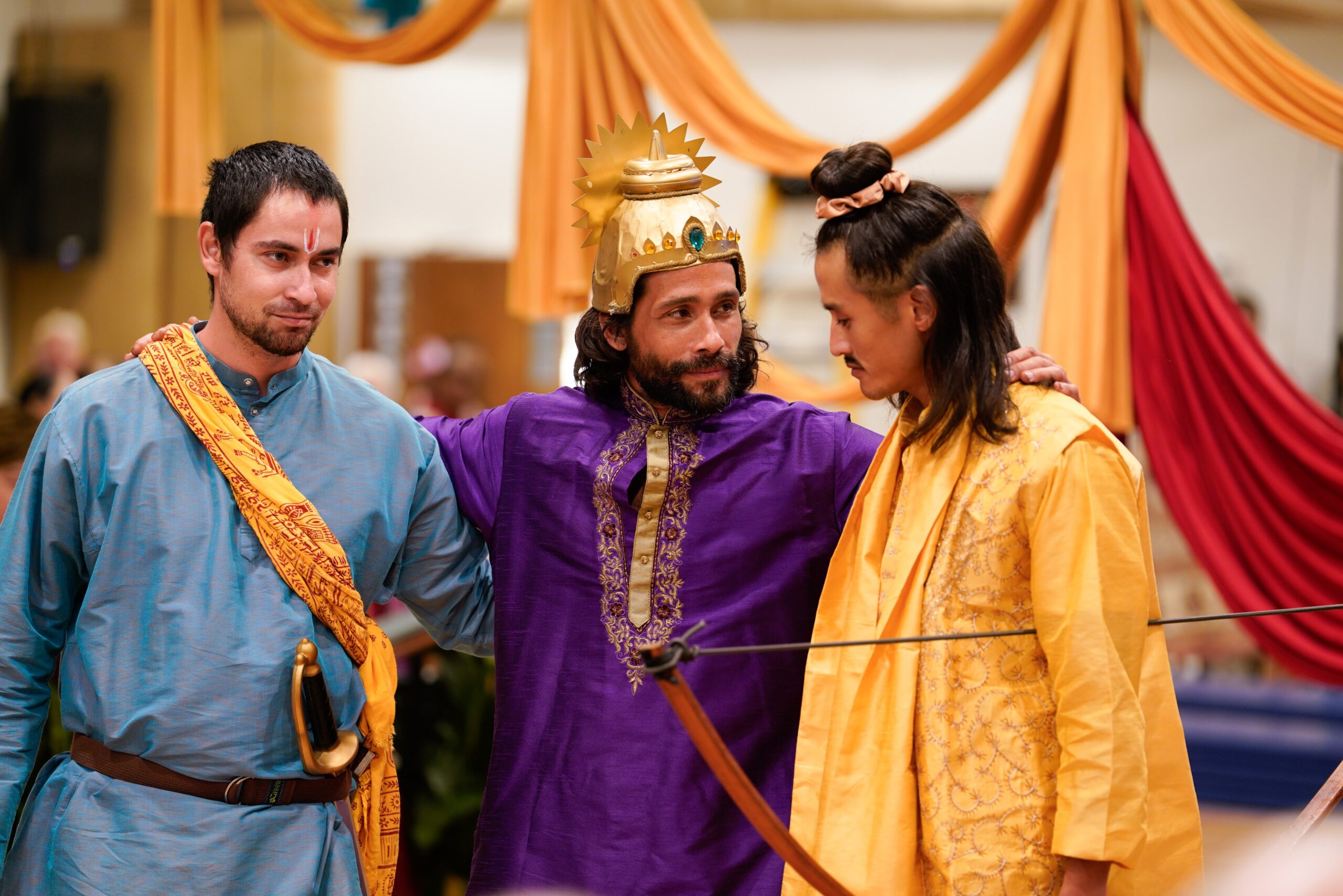
Ever since 2014, our staff, teachers, and students have stepped into character roles and dance performances to express the moods – from exulting to lamenting – of the various scenes. Each year, I’ve been amazed at how a group of non-theater people come together to create something so full of heart.
We begin with the demon king Ravana wreaking havoc in India. The sages and yogis pray for relief, so Lord Vishnu decides to be born on earth as a heroic human being: Prince Ram. Prince Ram eventually meets his soulmate, the peerless Princess Sita, who chooses to marry him. But before Ram can inherit the kingdom from his father, his step-mother has him banished to the forest. Accompanied by his faithful Princess Sita and his trustworthy brother Prince Lakshman, Prince Ram embarks on a harrowing adventure, facing foes and meeting allies, such as the leaping monkey hero Hanuman.
I can hardly wait to meet the new characters entering our enactment! Renée has revised this year’s script by adding two surprisingly admirable characters to the demon side of the equation: King Ravana’s virtuous wife and his noble brother Vibhishana, who stands up to the demon king’s evil schemes (Please see Word to the Wise). These additions acknowledge our respect for our wonderful Sri Lankan community.
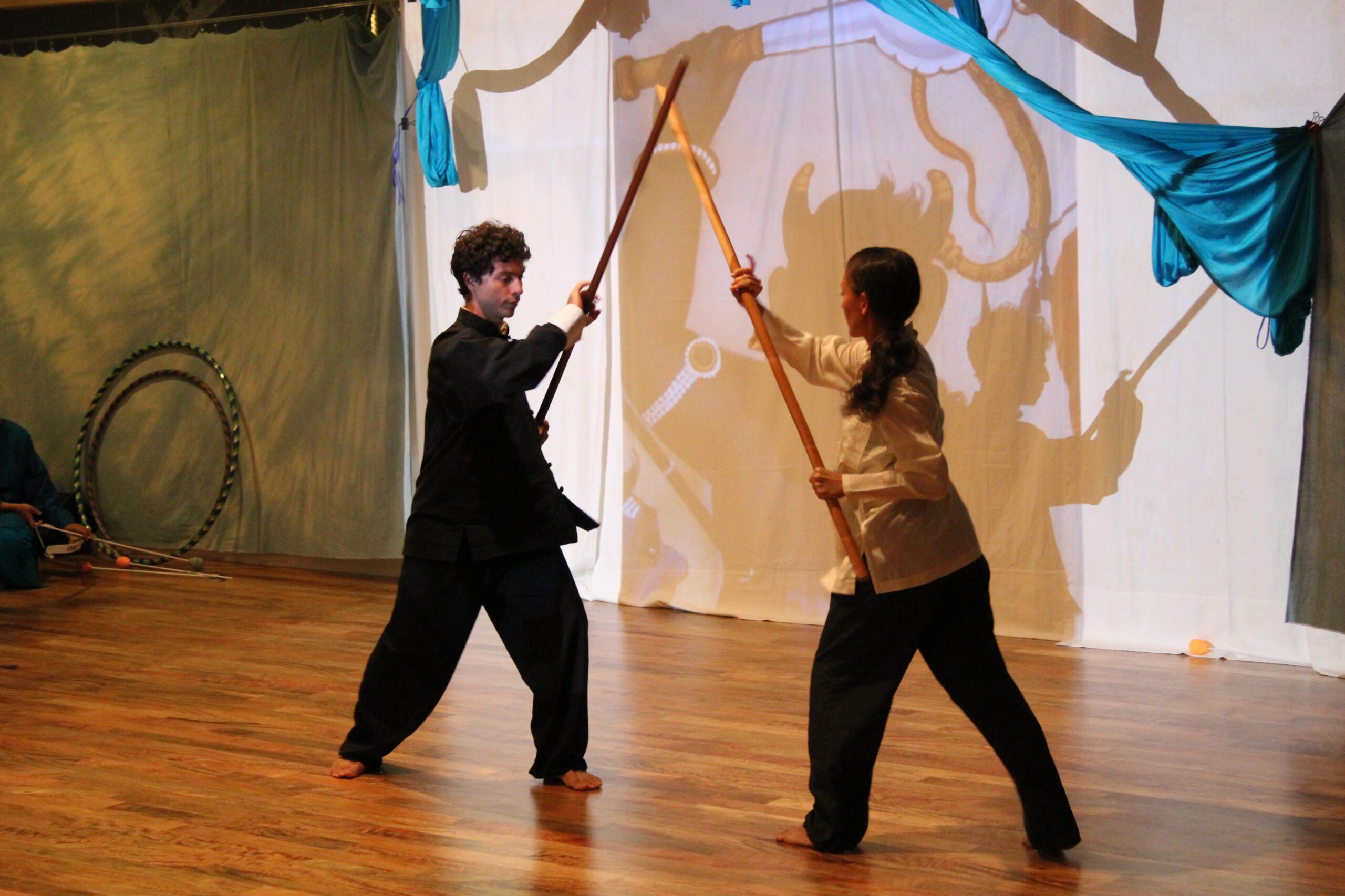
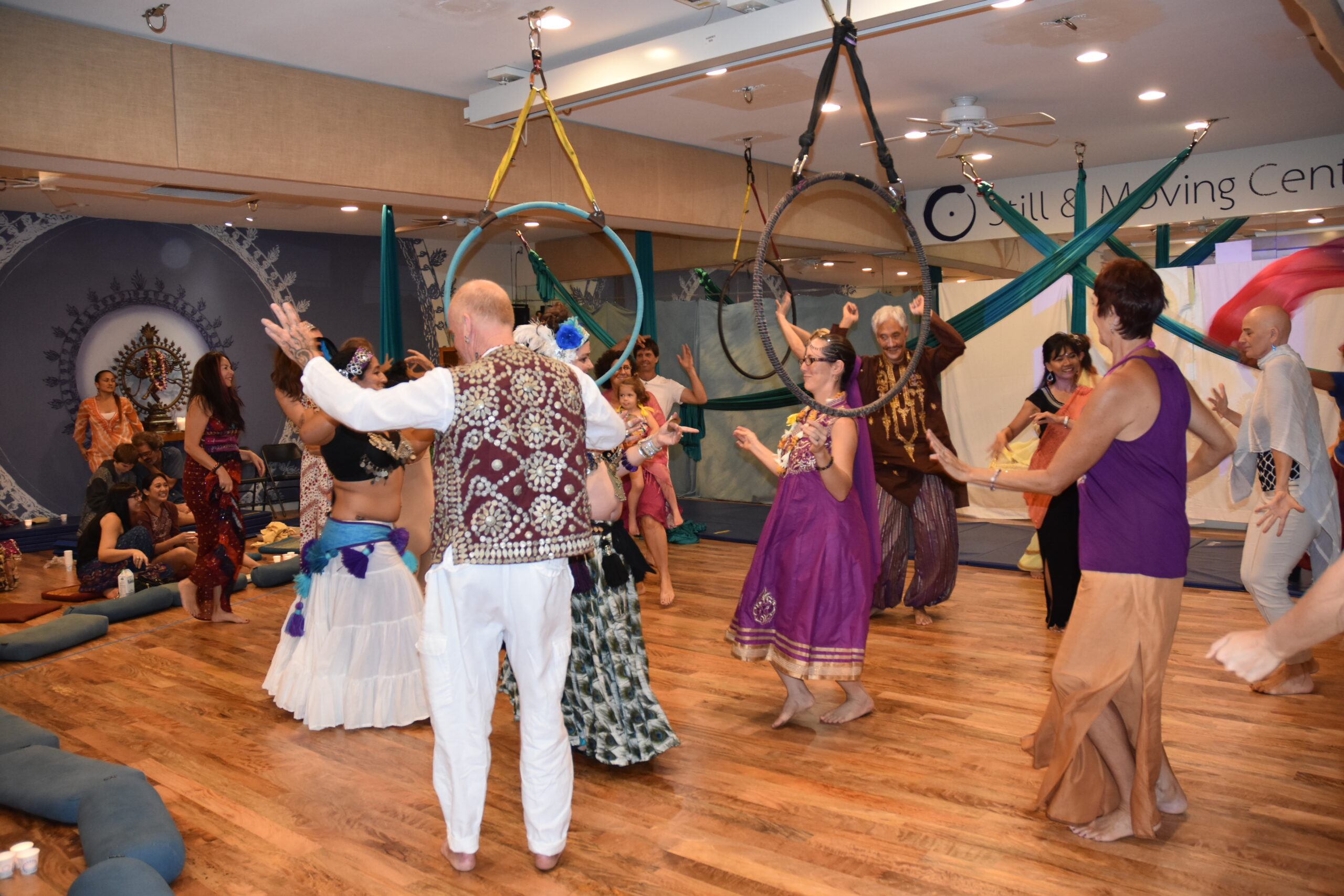
Our already international celebration of the event, with Hawaiian hula, Argentine tango, Indian Bollywood dancing, and more, will this year add another cultural dimension. Our newly arrived Capoeira instructor, Mestre Kinah, will choreograph Brazilian stick fighting for our final battle scene. What serendipity! Our qigong instructor Deeshen Shah, who is playing the lead role of Prince Ram, has already participated in a similar stick dance called Dandiya from his native India! Wonders never cease as we produce our evolving Ramayana enactment each year.
For 2025, Renée has entrusted me not only with the narration, but also with the production and direction of the Ramayana. I feel buoyed knowing my colleague Tiffany Soriano, with her theater background, will support me in many ways. I know, too, that my husband Mark and our musical director Dustin Hara will provide our marvelous, live soundscape, and our Bharatanatyam dance instructor Janani Lakshmanan will once again ensure the event’s cultural integrity. And Renée’s got my back whenever I might need her!
For me, I most love seeing my fellow teachers and classmates – transformed by costume and makeup – acting and emoting on stage. Rehearsals begin this week. I can’t wait to share this timeless story with you in just a few weeks!
What will become of the brave Princess Sita when the demon King Ravana learns that she is in the wilderness, far from the protection of the kingdom? I hope you’ll make your reservations for our Diwali celebration well in advance – either in person or on Zoom – to watch the thrilling conclusion of this epic tale!
With Aloha,
Doris Morisaki
Word to the Wise
The Moral Courage to Stand Up & Speak Truth to Power
The Ramayana – A Summary by Swami Vivekananda
I shall tell you the story of Vibhishan the hero. He braved a danger that was greater than the danger of death: he braved the fury of a king and gave him the wise advice that others dared not voice.
The demon-king of Lanka was Ravana of the Ten Heads. Ravana had stolen lady Sita away from her husband and carried her off in his chariot to his palace on the island of Lanka.
She was unhappy and every day she would shed tears, not knowing whether she would ever see her Lord Rama again.
Glorious Rama learnt from Hanuman the monkey-king where his wife Sita was held captive. He set out with noble Lakshman, his brother, and a great army of heroes to the rescue of the prisoner. When the demon Ravana learnt of the arrival of Rama, he trembled with fear.
The advice he received was of two kinds. A crowd of courtiers thronged around his throne saying: “All is well; have no fear, O Ravana. Gods and demons you have conquered: you will have no difficulty in conquering Rama and his companions, the monkeys of Hanuman.”
When these noisy counsellors had left the king, his brother Vibhishan entered, knelt and kissed his feet. Then he rose and sat at the right hand of the throne. “O my brother,” he said, “if you wish to live happily and keep the throne of this beautiful island of Lanka, give back the lovely Sita, for she is the wife of another. Go to Rama and ask his forgiveness, and he will not turn away his face. Be not arrogant and foolhardy.”
A wise man, Malyavan, heard these words and was glad. He exclaimed to the king of demons: “Take your brother’s words to heart, for he has spoken the truth.”
The eyes of the king’s ten heads flashed with such fury that Malyavan fled from the room in terror. But Vibhishan, in the bravery of his soul, remained.
“Sire,” he said, “in the heart of each man there is both wisdom and foolishness. If wisdom dwells in his breast, life goes well with him; if it is foolishness, all goes ill. I fear that you harbour foolishness in your breast, O my brother, for you give ear to those who give bad advice. They are not your true friends.”
He fell silent and kissed the feet of the king.
“Wretch!” cried Ravana. “You too are one of my enemies.” And as he shouted he kicked his brave brother Vibhishan.
So, with a heavy heart, his brother rose and left the king’s house. Knowing no fear, he had spoken frankly to Ravana; and since the ten-headed one would not listen, Vibhishan had no choice but to leave.
Vibhishan’s act was one of physical courage, for he did not fear his brother’s blows; but it was also an act of mental courage, for he did not hesitate to utter words that the other courtiers, physically as brave as he, would not have let fall from their lips. This courage of the mind is known as moral courage.
So we have noted three kinds, three degrees of courage: Physical courage for oneself. Courage for the near one, the friend, the neighbour in distress, the threatened motherland. Finally, the moral courage that enables one to stand up to unjust men, however powerful they may be, and to make them listen to the voice of right and truth.

Renée Tillotson
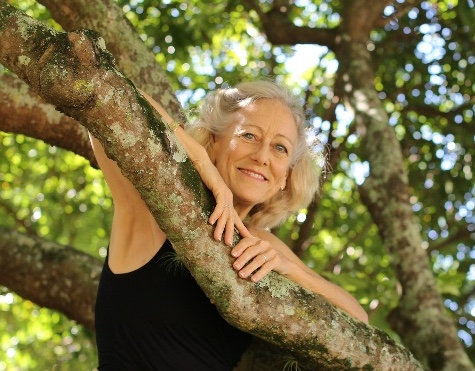
Renée Tillotson, Director, founded Still & Moving Center to share mindful movement arts from around the globe. Her inspiration comes from the Joy and moving meditation she experiences in the practice of Nia, and from the lifelong learning she’s gained at the Institute of World Culture in Santa Barbara, California. Engaged in a life-long spiritual quest, Renée assembles the Still & Moving Center Almanac each year, filled with inspirational quotes by everyone from the Dalai Lama to Dolly Parton. Still & Moving Center aspires to serve the community, support the Earth and its creatures, and always be filled with laughter and friendship!
Get the Still & Moving App
This post is also available in: